REVIEW · VENICE
Walking Tour and Enchanting Gondola Journey in Venice
Book on Viator →Operated by VENEZIA TOUR ITALY · Bookable on Viator
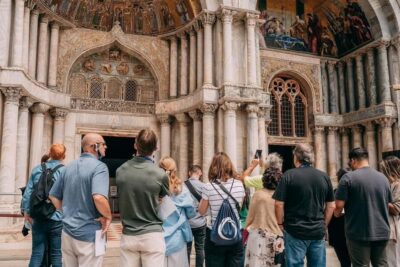
Gondola views, plus a guide to steer you. This shared Venice tour blends a guided walk through the St. Mark’s area with a 30-minute gondola ride, so you get both the street-level Venice and the water-level Venice. I especially like how the guide keeps you moving with clear context, plus the headset audio that helps you hear the stories without guessing.
I also like that the walk targets the spots that most people miss when they wander alone—St. Mark’s Square surroundings, Rialto Bridge, and the Grand Canal. You’ll get practical orientation fast, and the small-group gondola part means you’re not stuck in a huge crowd all at once.
One consideration: this is a shared tour, and the style can lean toward explanations over big “photo stops.” If you want only landmark-chasing and minimal talking, you might wish for a different pace.
In This Review
- Key highlights to watch for
- A 3 p.m. Venice Combo: St. Mark’s Walk Meets a 30-Minute Gondola
- Where it starts: Giardini Reali and the Aliguna Ticket Office handoff
- From Campo San Moisè toward St. Mark’s Square: history you can actually use
- The Bovolo Staircase and the La Fenice pause
- Campo Santa Maria Formosa: a quieter square and a church with Byzantine-meets-Renaissance style
- Rialto Bridge viewpoint: canal theatre, arches, and the city’s busy pulse
- Grand Canal time: more than a view, it’s your geography lesson
- When you’re on the gondola: shared reality, assigned seating
- La Fenice and the Teatro San Benedetto story: why theatre shows up on this walk
- Extra Venice facts on the route: place names and old trade clues
- Price and logistics: what you’re paying for (and what you aren’t)
- Who should book this Venice walk + gondola?
- Should you book this Venice Gondola + Walking Tour?
- FAQ
- How long is the walking tour and gondola experience?
- What language is the tour offered in?
- Is the gondola ride private?
- Do I get to choose my gondola seat?
- What meeting point do I use, and when should I arrive?
- Is there an entrance fee for some visitors to Venice?
Key highlights to watch for
- St. Mark’s orientation with guided pacing, so you don’t waste time backtracking through alleys
- Shared gondola with a professional gondolier, where you don’t steer and you can actually relax
- Audio headset narration that keeps the tour intelligible while you’re walking and regrouping
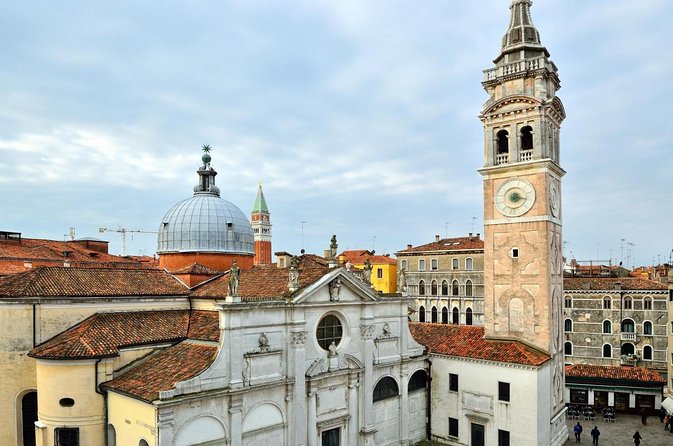
- Stops built around architecture, including Bovolo Staircase and the Santa Maria Formosa area
- Big-canal time that helps you understand how Venice is laid out from the water
A 3 p.m. Venice Combo: St. Mark’s Walk Meets a 30-Minute Gondola
This is a classic “best-of” setup: land first, water after. Starting at 3:00 pm, you’ll spend about two hours total—enough time to get oriented around the most famous core of Venice without feeling like you’re spending your whole afternoon in a line.
The value here is in the mix. Venice can feel like a maze when you’re on foot, and it can feel random when you’re on the water. A guide stitches the two perspectives together, so the canals start to make sense as you move from square to square.
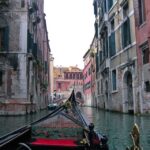
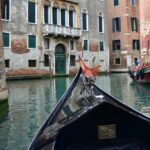
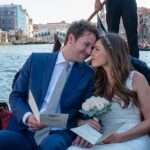
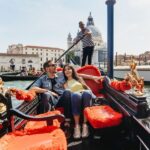
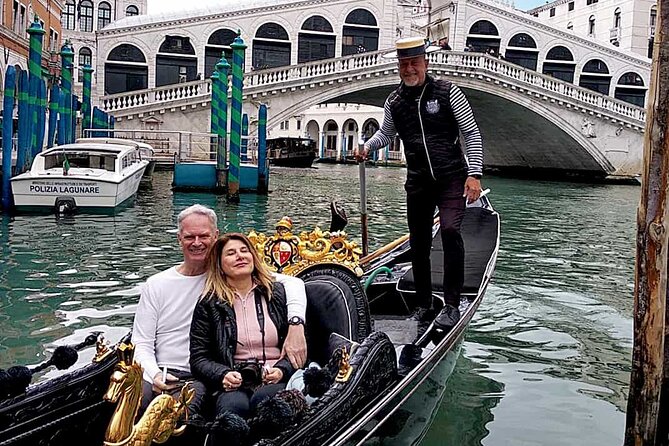
And yes, you get the gondola moment. It’s not a private boat, but it is a guided shared ride with a maximum of five people per gondola, and the gondolier does the work. For me, that’s the sweet spot: you still get the romance, while you’re spared the stress of steering, timing, or route decisions.
You can also read our reviews of more tours and experiences in Venice.
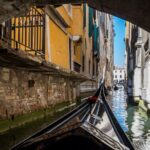
Where it starts: Giardini Reali and the Aliguna Ticket Office handoff
Your meeting point is at Giardini Reali, P.za San Marco, 30124 Venezia VE, Italy, and the tour ends back there. The key practical detail is that you’re not just showing up and walking in. You’ll need a voucher sent by WhatsApp and then exchanged for tickets at the Aliguna Ticket Office.
Arrive 20 minutes early. This matters because you have to present the voucher at the ticket desk before you can start. If you’re running on Venice time—meaning “almost there”—this is one of the moments where being early pays off.
Also note the tour can change if weather turns ugly. Venice weather can shift quickly, and the operator says the schedule may adjust. Keep one flexible hour available on the afternoon you book.
From Campo San Moisè toward St. Mark’s Square: history you can actually use
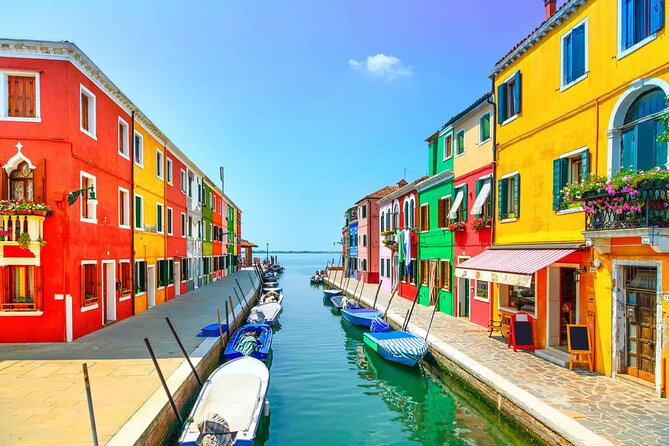
You begin near St. Mark’s Square at Campo San Moisè, then move through narrow streets and small squares between St. Mark’s Square and the Rialto Bridge area. The guide’s job here is huge: helping you understand what you’re looking at while also keeping you from getting lost in the back-and-forth of Venice alleyways.
This is where the audio headset is more than a nice perk. Listening while you walk helps you connect names—like churches, stairways, and opera landmarks—with what’s directly in front of you. You’ll also hear about Venice through anecdotes and references to local culture, including mention of the Venetian dialect.
The Bovolo Staircase and the La Fenice pause
One standout stop in this early section is the Bovolo Staircase. It’s a Renaissance masterpiece and a great target because it’s visually specific—you know it when you see it. If you’ve ever had a guide point at something and say, “This is important,” Bovolo is the kind of stop that makes importance obvious.
You’ll also pause around La Fenice, the famous opera house. Even if you never plan to buy an opera ticket, this pause works because it puts a human face on Venetian drama—then you’ll get the story behind how theatre culture shaped the city.
Possible drawback: the conversation can run history-forward. If you’re hoping for an ultra-fast “click photos, move on” tour, you may feel like you’re being asked to listen longer than you want.
Campo Santa Maria Formosa: a quieter square and a church with Byzantine-meets-Renaissance style
Next, you head to Campo Santa Maria Formosa and the Santa Maria Formosa Church area. This is a nice shift in mood: still central Venice, but not the “constant crush” feeling you get right next to the most famous facades.
The tour points you toward the church’s architectural blend. The facade mixes Byzantine and Renaissance elements, and the church traces origins to the 15th century. That mix is the kind of detail that helps you stop seeing Venice as one uniform style and start seeing it as layers built over time.
You’ll have about 20 minutes here, which is long enough for a quick look around and a breather before you get back into the street rhythm. I like that the pace slows enough for you to actually notice what’s in the square—colors, textures, and the everyday flow of people moving in and out of nearby lanes.


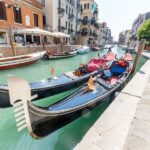


Rialto Bridge viewpoint: canal theatre, arches, and the city’s busy pulse
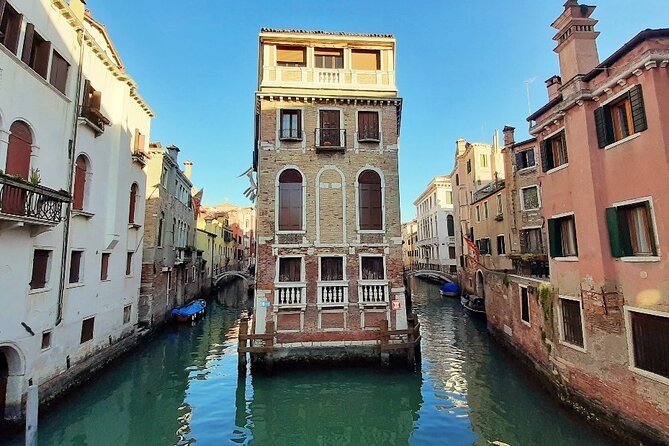
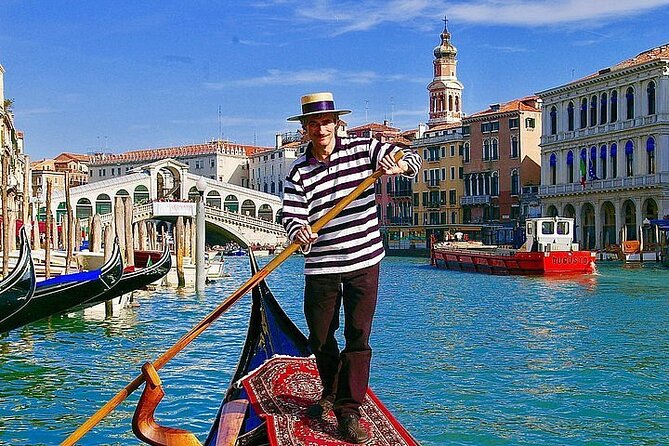
Then you reach the Ponte di Rialto area. This is where Venice stops being abstract. The Rialto Bridge is a signature crossing between San Marco and San Polo, with graceful arches and shops along the sides. It dates back to the 16th century, which means you’re looking at a structure that has been part of Venice’s canal life for centuries.
You’ll get around 10 minutes here, so treat it as a quick orientation moment plus a photo break, not an extended explore. The best use of the time is to look both ways across the canal and notice how gondolas and water traffic move under the bridge.
This stop works well because it connects architecture to function. Venice buildings aren’t just pretty—they’re designed around water movement. Seeing the canal from Rialto is a fast way to understand that.
Grand Canal time: more than a view, it’s your geography lesson
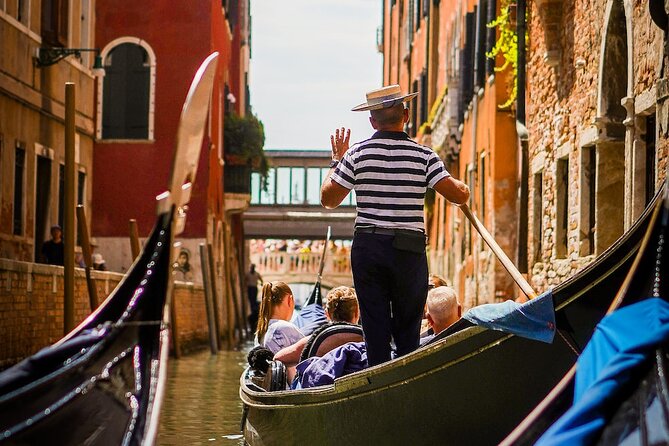
From the Rialto area, the tour includes Grand Canal time—about 30 minutes—as you watch Venice from the water perspective. The Grand Canal is over 2 miles long and shaped like a long “S,” stitching neighborhoods together like the city’s main corridor.
On a guided canal segment like this, you’re not just taking in pretty facades. You’re learning how Venice’s layout works. Palaces, churches, and buildings face the water, so from the canal you get a clearer sense of wealth distribution, trade, and the city’s practical design choices.
The tour also frames the canal traffic as part of daily life—gondolas and vaporettos moving like a regular system. That’s a key point: Venice isn’t only for tourists; it’s a living city with a transportation network built into the scenery.
When you’re on the gondola: shared reality, assigned seating
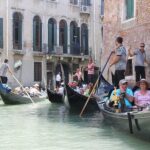
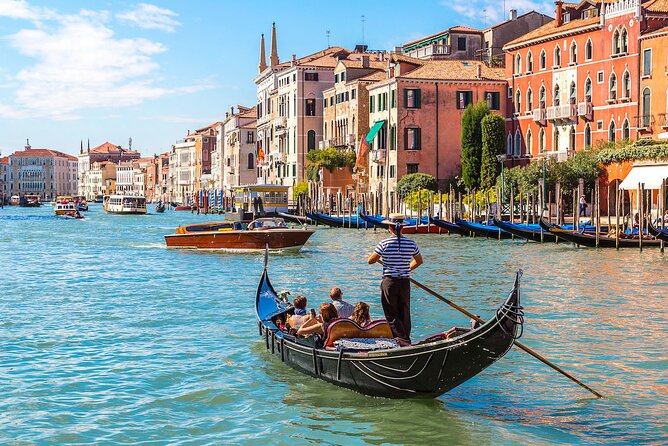
The gondola ride is shared, and seat choice isn’t available. Your gondolier assigns seating, and the gondola is capped at five people. That’s important because it affects comfort and how much you can lean for photos.
If you’re sensitive to tight spaces or you’re traveling as a group that needs exact seating, plan for some compromise. The upside is that the gondola portion is not a huge production—there are still other people aboard, but it’s not meant to be packed beyond that five-person limit.
La Fenice and the Teatro San Benedetto story: why theatre shows up on this walk
The tour also includes a longer historical thread about Venetian theatre. You’ll hear that in the late 18th century, Venice had a set of theatres: some for performances and others specifically for music.
One building in that storyline is Teatro San Benedetto, described as the height of opulence, founded in 1755 and linked to the Grimani family. Ownership later passed to the Noble Society of Boxholders, and a legal decision in 1787 forced them out. The theatre was then associated with Venier nobles, who claimed the ground. That setback is connected to the building of a newer, bigger theatre called Gran Teatro La Fenice, named as a nod to the mythical bird idea from Herodotus’ Histories.
Why does this matter for you? Because it changes how you see La Fenice and the surrounding architectural mood. Instead of treating the opera house like a postcard, you understand it as part of a real culture of competition, prestige, and reinvention in Venice.
It’s also a good example of the tour’s style: the guide uses specific stories to make architecture stick in your head.
Extra Venice facts on the route: place names and old trade clues
Along the walking portion, the guide weaves in quirky, specific details about Venice’s place names. One theme is how “green” and cultivation show up in the city map through terms like campi, campazzi, and grass-covered courtyards, plus references to fig tree features (even when you don’t see literal gardens).
Another theme is old waterways and trade. You might hear about records such as Rio dell’Alboro from 1696, and Rio de le Ostreghe showing up in the following century. There’s a suggestion that seafood vendors once worked nearby, and the cultivation/trade of seafood is said to have grown early in the 19th century. That history is tied to a canal name change: the ostregheri canal now known as Canale dei Lavraneri in the Sacca Fisola area.
I like facts like this because they change the way you walk after the tour. You stop thinking of Venice as purely decorative and start noticing how daily life and commerce shaped the streets and canals.
Price and logistics: what you’re paying for (and what you aren’t)
The price is $150.37 per person for about 2 hours. Food and drinks aren’t included, and transport isn’t included either. That part is straightforward, but the value question matters.
Here’s what you’re really paying for:
- A guided walk with a structure that helps you navigate St. Mark’s area without random wandering
- Audio headsets so the narration stays clear while you move
- A 30-minute shared gondola ride with a professional gondolier
If you were to do these separately—self-guided wandering plus a gondola booked on your own—you’d likely spend similar money once you add the time cost and the need to figure out meeting logistics. The best value is for first-timers or anyone who wants a “Venezia orientation” afternoon.
What to watch for: this is shared. One negative theme in feedback is disappointment when expectations for group size or the gondola experience don’t match the booking description. The operator states max five on the gondola and up to 15 for walking, so when you arrive, do a quick headcount and compare it to what you were expecting. If something looks off, ask promptly.
Who should book this Venice walk + gondola?
This tour is a good match if:
- You want a guided route through the St. Mark’s core and don’t want to spend hours getting your bearings
- You like architecture stories, not just landmark snapping
- You want the gondola experience without the hassle of steering or planning
It might be less ideal if:
- You want lots of free time to linger at each stop without explanations
- You prefer a private, quiet gondola experience
- You’re extremely time-sensitive and can’t handle the need to exchange vouchers at the ticket office
Should you book this Venice Gondola + Walking Tour?
I’d book it if you’re prioritizing “orientation plus iconic Venice.” The guided flow around St. Mark’s area, the Bovolo Staircase and Rialto Bridge focus, plus the audio support, make it easier to actually understand what you’re seeing. The gondola portion is short, shared, and guided by a professional—so you get the heart of the experience without the full-time commitment.
Skip it or consider a different style if you’re the type who wants either a long gondola ride or a more landmark-heavy pace with less storytelling. In that case, you might feel constrained by time limits at each stop and the shared-group vibe on the water.
If you do book, show up early for the ticket exchange, wear comfortable shoes, and treat the guide’s stories as a map. Venice rewards you when you connect names to places—and this tour is built to help you do that fast.
FAQ
How long is the walking tour and gondola experience?
It runs for about 2 hours (approx.), including a 30-minute shared gondola segment.
What language is the tour offered in?
The tour is offered in English.
Is the gondola ride private?
No. The gondola ride is shared with other participants, and each gondola can accommodate a maximum of 5 individuals.
Do I get to choose my gondola seat?
No. The seat cannot be chosen and will be assigned by the gondolier.
What meeting point do I use, and when should I arrive?
You meet at Giardini Reali, P.za San Marco, 30124 Venezia VE, Italy for a 3:00 pm start. You’re asked to arrive 20 minutes early to exchange your WhatsApp voucher for tickets.
Is there an entrance fee for some visitors to Venice?
On certain dates, some visitors staying outside Venice may need to pay a €5 access fee. Check applicable days and exemptions at https://cda.ve.it