REVIEW · BURANO
Venice Explorer Pass: Gondolas, Museums & Island Tours
Book on Viator →Operated by Turbopass GmbH · Bookable on Viator
Venice in a single organized hit is rare. This pass packs 30+ attractions into one plan, then adds a gondola ride plus an island day, so you spend less time hunting tickets and more time seeing Venice. It’s built for English speakers and capped at small groups (max 10), which matters when you’re juggling timed sights.
I especially like Doge’s Palace with skip-the-line access. And I like that the lagoon getaway is included as Murano–Burano–Torcello, with glass, lace, and old churches in one smooth flow instead of planning it from scratch.
One caution: you need to read your voucher closely. Not everything is guaranteed skip-the-line, and some church or special access may depend on selecting an added option correctly.
In This Review
- Key things to know before you go
- Venice Explorer Pass: Big Sights Without the Ticket Chaos
- Doge’s Palace and the Skip-the-Line Real Benefit
- A Museum Day That Actually Covers Real Venetian Taste
- National Archaeological Museum: Greek and Roman sculpture context
- Biblioteca Nazionale Marciana: maps, language, and Venice’s book brain
- Museo Leonardo da Vinci: interactive, not lecture-y
- Churches and Confraternities: Art Outside the Main Photo Spots
- Scuola Grande San Rocco: a big confraternity with major paintings
- Museo Correr and the Venetian Republic story
- Venice Staircase and Hidden-Feeling Architecture (Without the Guesswork)
- Scala Contarini del Bovolo: a spiral staircase moment
- Gondola Ride: Worth It for the View, Not for the Speed
- Island Tour: Murano, Burano, Torcello in One Shot
- Murano: glass and the workshop experience
- Burano: bright houses, fishing life, and lace
- Torcello: older churches and quieter atmosphere
- More Art Stops: Ca’ Rezzonico, Ca’ Pesaro, and Costume-Focused Museums
- Ca’ Rezzonico: Venetian life in the 18th century
- Ca’ Pesaro: modern art plus oriental art
- Palazzo Fortuny and perfume/fabrics at Mocenigo
- Murano Glass Museum and Burano Lace Museum: The Craft Closes the Loop
- Murano Glass Museum
- Museo del Merletto di Burano: lace in context
- Practical Time Planning: How to Use This Pass Without Getting Burned
- Price and Value: Is $102 per Person a Good Deal?
- Who This Is Best For (and Who Might Prefer Something Else)
- Should You Book This Venice Explorer Pass?
- FAQ
- What attractions are included with the Venice Explorer Pass?
- How long is the gondola ride, and is it included?
- Is the Murano, Burano, and Torcello island tour included?
- Does the pass include skip-the-line entry for everything?
- Is public transportation included?
- How big are the groups?
- What is the cancellation window?
Key things to know before you go

- Skip-the-line at Doge’s Palace saves real time where lines are notorious.
- Gondola included helps you fit a canal-view classic into a tight schedule.
- Murano–Burano–Torcello island tour packages three very different islands efficiently.
- A museum-heavy day plan includes Marciana, the Archaeological Museum, and an interactive da Vinci stop.
- Small group size (max 10) helps the walking tour and transitions stay manageable.
- Voucher accuracy matters if you care about skip-the-line or specific church access.
Venice Explorer Pass: Big Sights Without the Ticket Chaos
This is the kind of pass that works best when you’re trying to cover Venice fast, without losing half a day to ticket desks, line-jumping promises, and figuring out what’s already included. It’s also useful if you don’t want to build a spreadsheet of timed entries before you even land.
The pass runs as a flexible option over about 1 to 5 days, and it’s priced at $102.01 per person. That price only feels smart if you actually use multiple included stops (and you plan your days so you’re not zigzagging across Venice for one quick visit). With a maximum group size of 10, it’s not the mass-market bus vibe—more like a structured sightseeing rhythm.
Also, it’s offered in English, which makes a difference for Venice, where signage and ticket language can get messy fast if you’re bouncing between museums, churches, and canal transport.
Doge’s Palace and the Skip-the-Line Real Benefit

Let’s talk about Doge’s Palace, because this is the headline inclusion for many first-timers. The pass includes admission to Palazzo Ducale (Doge’s Palace) and specifically calls out skip-the-line access. That matters because this is one of Venice’s busiest sights, and “skip-the-line” is often the difference between a relaxing visit and an exhausted one.
Inside, you’re stepping into the former residence of Venetian dukes—an elegant mix of gothic architecture and political power that’s far more interesting than people expect from the outside photo. The schedule you’ll see for this stop is about 2 hours, which is a sensible time window if you want to read a bit, not just rush.
Practical tip: plan Doge’s Palace early in your day (when you can). Even with skip-the-line, you’ll still want enough time afterward to wander the surrounding area before your energy drops.
A Museum Day That Actually Covers Real Venetian Taste
One reason people like passes like this is that they reduce decision fatigue. You get a built-in museum route that fits together thematically: classical roots, Venetian culture, and art/idea-driven stops.
Here are the big ones on the plan:
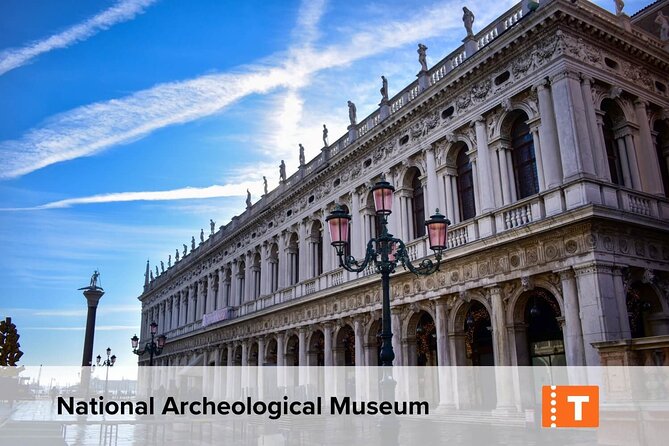
National Archaeological Museum: Greek and Roman sculpture context
The National Archaeological Museum is scheduled for about 2 hours. You’ll see ancient Greek and Roman works, many connected to donations from private Venetian aristocrats. That aristocrat angle matters because it links what you’re looking at to how Venetian elites collected art and shaped taste over centuries.
If you like sculptures with good captions and you enjoy learning how collections got assembled, this stop feels more grounded than some “famous objects only” museum visits.
Biblioteca Nazionale Marciana: maps, language, and Venice’s book brain
The Biblioteca Nazionale Marciana is listed for about 2 hours. This is one of Venice’s key intellectual sites, with holdings focused on Greek, Latin, and Oriental works. You’ll also find collections tied to Venetian history and classical linguistics, plus ancient geography maps.
Even if you’re not a lifelong book nerd, the Marciana experience can be a morale boost. It gives you a break from the constant walking, while still feeling distinctly Venetian.
Museo Leonardo da Vinci: interactive, not lecture-y
The Leonardo da Vinci interactive museum is about 2 hours and is described as hands-on. For me, this is the kind of museum that keeps momentum going in Venice, where sitting still can be rare. If you’ve got kids, it’s even more helpful, but adults often enjoy it too because it’s more active than you’d expect from a museum name alone.
Churches and Confraternities: Art Outside the Main Photo Spots
Venice isn’t just palaces and canals. It’s also brotherhood buildings (scuole) that hold major paintings and architectural flourishes, and this pass spreads you beyond the typical “one church, one bridge photo” loop.
Scuola Grande San Rocco: a big confraternity with major paintings
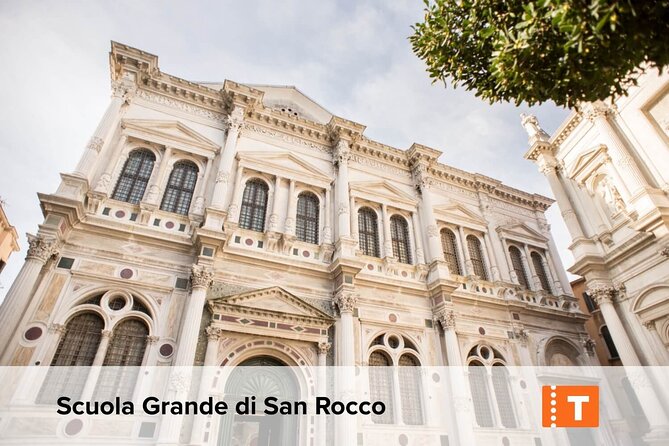
Scuola Grande di San Rocco is included and is described as one of Venice’s largest confraternities, founded in the 13th century. The visit time listed is about 2 hours (and the pass marks this stop as free with admission). You’ll encounter the layered mix of religious and civic life, plus major works associated with painters named in the program.
This stop can be a win if you like your Venice less crowded and more art-focused. The building size also helps: you’re not squeezed into a tiny chapel with constant shuffling.
Museo Correr and the Venetian Republic story
Museo Correr is also part of the included set and is scheduled for about 2 hours. It’s positioned as a cultural lens on the Venetian Republic, with bronze, paintings, and books.
If you’re the type who wants one museum to help you understand the city’s “why,” this is the right genre of stop.
Venice Staircase and Hidden-Feeling Architecture (Without the Guesswork)

Some stops on this pass are short on hype but strong on architecture. You get a chance to see Venice’s building imagination without adding extra transit planning.
Scala Contarini del Bovolo: a spiral staircase moment
The Scala Contarini del Bovolo is included and the program lists it for about 2 hours. It’s famous for its spiral staircase attached to a gothic palace, and the attention it grabs is for a reason: it’s visually playful in a city that’s often all marble, canals, and symmetry.
This is also a good “reset stop.” You can use it when you want a break from inside museums but still want something meaningful.
Gondola Ride: Worth It for the View, Not for the Speed
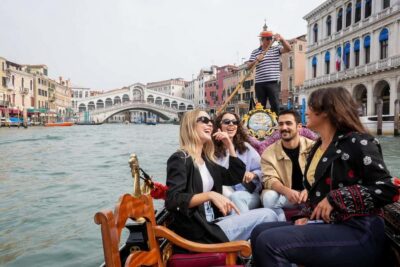
Now for the canal classic. This pass includes a Venice gondola tour as part of the experience. The ride is listed at 20 minutes, and it’s free with your plan.
Here’s what you can realistically expect: a shared ride, so you’re not getting a private gondolier session. Still, the gondola view is one of the best ways to understand Venice’s scale. You’re seeing buildings and landmarks from the canal level, including areas around Piazza San Marco and the Canal Grande plus smaller canals.
One small reality check: 20 minutes is short, so you’ll want to go in with the right mindset. Treat it as a photo-and-impressions ride, not a long cruise.
Also, if you’ve seen gondola prices on the street, that short included window can feel like a bargain compared to paying separately.
Island Tour: Murano, Burano, Torcello in One Shot
The island day is one of the most logical ways to spend time beyond Venice’s main core. The pass includes an island tour to Murano, Burano, and Torcello, scheduled for about 5 hours.
This is one of the best parts of the program because it hits three different “Venice moods”:
Murano: glass and the workshop experience
Murano is where you’ll focus on handmade glass. The plan even points out visiting a glassblowing workshop. If you care about how things are made (not just seeing a finished object behind glass), Murano delivers.
Burano: bright houses, fishing life, and lace
Then you move to Burano, known for its vibrant colors and the traditional world of fisheries. You can also see the famed bobbin lacework, and there’s a lace museum stop included later (more on that below).
Torcello: older churches and quieter atmosphere
Finally, Torcello slows things down. It’s home to ancient St. Maria Assunta Cathedral and St. Forsa Church, with dates referenced as 11th and 12th century. This island stop is the one that often feels most “time-worn” and less like an amusement stop.
If you want lagoon variety without overthinking boat schedules, this part of the pass is doing real work.
More Art Stops: Ca’ Rezzonico, Ca’ Pesaro, and Costume-Focused Museums
The pass keeps adding palace museums that help round out the city beyond the big-ticket icons.
Ca’ Rezzonico: Venetian life in the 18th century
Ca’ Rezzonico is included and listed around 1 hour. It’s described as one of the few Venetian noble palaces open to the public, now housing Museo del Settecento Veneziano. Expect art and interior decorations tied to major Venetian painting periods, plus works connected to artists named in the program (including Longhi, Canaletto, and the Tiepolo family).
If you like interiors and the feeling of stepping into a wealthy home, this is a great “walk, look up, read a little” stop.
Ca’ Pesaro: modern art plus oriental art
Ca’ Pesaro includes the International Gallery of Modern Art in the main sections, plus temporary exhibitions and an Oriental Art area on higher floors. The program lists this around 1 hour.
This stop is for you if you want contrast. Venice can feel like it’s frozen in classical styles, so seeing 19th and 20th-century art helps.
Palazzo Fortuny and perfume/fabrics at Mocenigo
You also get Museo di Palazzo Fortuny and Palazzo Mocenigo. Fortuny is tied to Mariano Fortuny’s art, design, and lighting ideas, and includes a tour-through of paintings, photographs, and fabrics arranged in his vision of light. Mocenigo focuses on ancient fabrics, clothes, and even a perfume study center.
These costume-and-material stops are a smart way to connect Venice’s wealth to how people dressed, how they displayed status, and how objects circulated.
Murano Glass Museum and Burano Lace Museum: The Craft Closes the Loop
Two of the most satisfying included stops are the craft museums tied to the islands:
Murano Glass Museum
The Glass Museum (Murano) is listed around 1 hour and described as a wide-ranging collection organized chronologically from antiquity to modern times. The later sections focus on the rebirth of Murano glass demand since the second half of the 19th century, including Art Nouveau and modern pieces.
If Murano’s workshop made you curious, this museum gives you the bigger story.
Museo del Merletto di Burano: lace in context
The Museo del Merletto di Burano is included and listed around 1 hour. It sits in the historic palace of Podestà of Torcello and is tied to Burano’s lace schooling. You’ll see rare pieces offering an overview of Venetian and lagoon lace artistry from origins to the present day.
This pairing works well: workshop look first, museum context second, and suddenly lace stops being a random souvenir idea.
Practical Time Planning: How to Use This Pass Without Getting Burned
A pass like this is only as good as your execution. Venice is full of doors that work “if you’re on time” and “not if you’re not.”
Here’s how to use it smarter:
- Front-load Doge’s Palace when you can, since it’s the one stop where skip-the-line access is explicitly part of the deal.
- Do the islands on a single block day. The 5-hour structure is meant to keep Murano–Burano–Torcello from turning into a stressed scramble.
- Group indoor stops together. You’ll hit several museums and palazzo interiors, and putting them in one concentrated stretch helps you keep momentum.
- Check your voucher line-by-line. Some people run into trouble when a pass is assumed to include skip-the-line for everything, or when a specific church access wasn’t selected properly.
Also, keep your expectations realistic about the gondola: 20 minutes and shared seating are the norm for most included gondola setups.
Price and Value: Is $102 per Person a Good Deal?
At $102.01 per person, this pass looks like value if you’re planning to see several major sights and you don’t want separate ticket hassle. The pass includes big anchors like Doge’s Palace, a da Vinci interactive museum, and the Murano–Burano–Torcello tour, plus a long list of museum and church stops.
The math gets easier if you’re already gondola-curious. One firsthand pricing comparison from a gondola purchase scenario put the on-the-spot cost around 80 euros per person, which makes the included ride feel like a meaningful savings lever. Even if gondola pricing varies day to day, the idea is consistent: included canal time can offset the pass cost quickly.
That said, it can feel overpriced if you only use one or two stops, or if you discover that certain add-ons (like specific church access) weren’t actually selected on your voucher. This is why the best value comes from planning a full day or two around the included attractions.
Who This Is Best For (and Who Might Prefer Something Else)
This pass suits you if:
- You’re visiting Venice with limited time and want a tight sightseeing structure.
- You like museums, palaces, and church art, not just scenic walking.
- You want the gondola and the lagoon islands without building the logistics yourself.
- You’re okay reading your voucher and working from a schedule.
You might want a different plan if:
- You’re the type who prefers total freedom and last-minute choices with no pass rules.
- You’re very sensitive to skip-the-line wording and need guaranteed fast entry at every single stop.
- You don’t want to do more museum density than you can handle in a day.
Should You Book This Venice Explorer Pass?
If you want Doge’s Palace, a gondola ride, and a Murano–Burano–Torcello island day without spending your whole trip figuring out tickets, I think this pass can be a smart move. The value comes from bundling the biggest time-sinks and the lagoon “day trip” into one purchase.
But do one thing before you buy: confirm what’s on your voucher. Make sure you understand where skip-the-line applies, and whether any specific church access you care about is actually included as selected. If your plan is clear and you use several included stops, the pass can make Venice feel more organized and less stressful.
FAQ
What attractions are included with the Venice Explorer Pass?
The pass includes entry to 30+ attractions, with items on the plan such as Doge’s Palace, the National Archaeological Museum, Biblioteca Nazionale Marciana, Museo Leonardo da Vinci, and multiple palaces and museum stops. It also includes the gondola ride and the Murano–Burano–Torcello island tour.
How long is the gondola ride, and is it included?
The gondola ride is included and lasts about 20 minutes. The tour is described as a Venice gondola experience with views of Venice’s canals and landmarks around Piazza San Marco and nearby areas.
Is the Murano, Burano, and Torcello island tour included?
Yes. The plan includes an island tour to Murano, Burano, and Torcello for about 5 hours, with stops described for glass in Murano and lace in Burano, plus visits to ancient churches on Torcello.
Does the pass include skip-the-line entry for everything?
The program specifically highlights skip-the-line access for Doge’s Palace. For other locations, you should check your voucher carefully, because skip-the-line coverage may not apply to every stop.
Is public transportation included?
Public transportation isn’t automatically included. The pass notes that you can book an optional public transportation ticket if you want it.
How big are the groups?
This experience is listed as having a maximum of 10 travelers, which should help the tour and transitions feel more manageable.
What is the cancellation window?
You can cancel up to 24 hours in advance for a full refund, based on the experience’s local time.
If you tell me your travel dates and how many days you have in Venice, I can suggest a simple “use-the-pass” schedule that keeps the walking and indoor waits from overlapping too much.