REVIEW · SIEM REAP
Angkor Bike tour & Gondola Sunset Boat
Book on GetYourGuide →Operated by Passion Indochina Travel Co.,Ltd. · Bookable on GetYourGuide
Golden-hour Angkor looks different from a bike. On this Siem Reap half-day, I love the rare path behind Angkor Wat that keeps the view calm and uncrowded while the temples glow in late light. It also turns the usual park visit into a moving photo-and-scenery experience instead of a slow shuffle.
I especially liked the way the English-speaking guide Bun adjusts the pace and route to fit the group. He’s also noted for helping you shoot better photos with smart vantage points—useful when you’re trying to frame temples during sunset rather than just admire them.
One consideration: this tour is physically demanding. If you’re not comfortable biking a lot of distance from your hotel and around the Angkor area, you’ll feel it fast in the afternoon heat.
In This Review
- Key highlights you’ll actually care about
- A Golden-Hour Angkor Combo: Bike Ride + Dragon Boat Sunset
- Timing and flow: how the 4–5 hours are paced
- Hotel pickup and setup: what starts on the right foot
- Cycling toward Angkor at sunset: that rare route behind Angkor Wat
- Rural Siem Reap lanes: rice fields, narrow roads, and family plots
- The mid-ride break: water, fresh fruit, and keeping it enjoyable
- How the tour avoids crowds while staying in the right temple zone
- Dragon boat sunset on a historic canal: the calm payoff
- Price and value: what $30 covers (and what you still need)
- Who should book this (and who should skip it)
- What to bring so you feel comfortable on the bike
- Guide matters: why Bun’s approach makes a difference
- Should you book Angkor Bike Tour & Gondola Sunset Boat?
- FAQ
- What’s the tour duration?
- Where does the tour take place?
- How much does the tour cost?
- What’s included in the price?
- What’s not included?
- Do I need to buy a temple pass in advance?
- What time does the tour start?
- How do hotel pick-ups work?
- Is the tour suitable for everyone?
- What should I bring?
Key highlights you’ll actually care about
- A rarely used route behind Angkor Wat for quieter, less pressured sunset views
- Rural Siem Reap cycling with narrow lanes, rice fields, and small family plots along the way
- Temple-area walking by roads and paths since the temples are closed to the public during this time
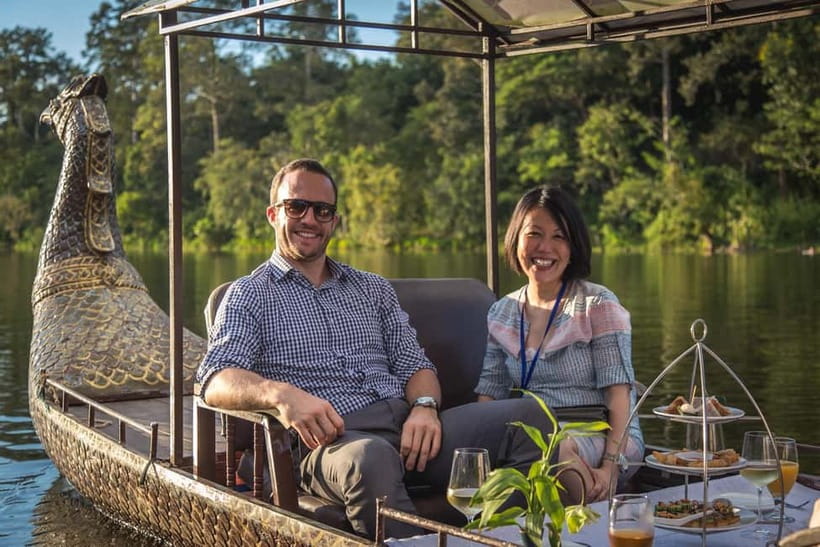
- Dragon boat sunset on a historic canal with local snacks and drinks onboard
- Guide-led tailoring (Bun is praised for pacing, photography tips, and attention to your needs)
- Support vehicle included, which helps take the stress out of the ride
A Golden-Hour Angkor Combo: Bike Ride + Dragon Boat Sunset
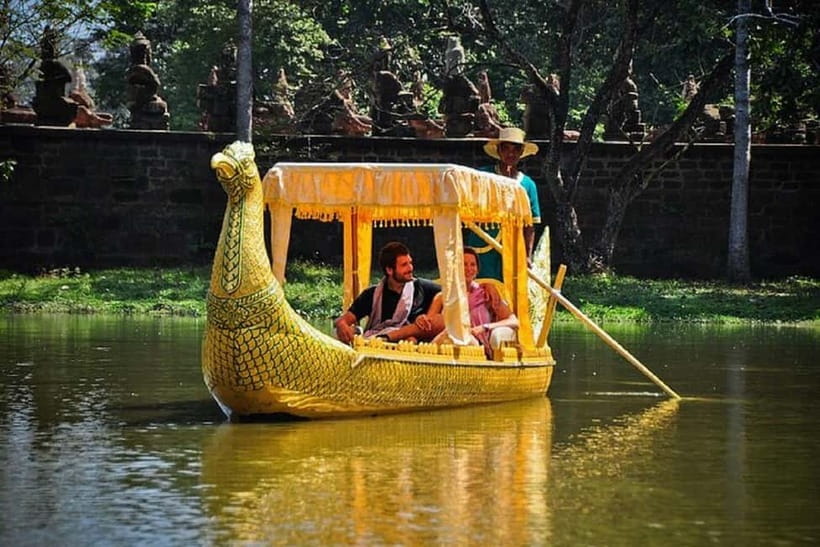
This is the kind of tour that changes your rhythm. Instead of spending a few hours inside a temple complex, you’re out moving through Siem Reap—then you end on water as the sky goes orange and gold. You’ll feel like you’re seeing Angkor from outside the usual script.
The cycling part also works in your favor. When you time it for sunset, the light turns stone into something softer. And because you’re guided along less crowded routes, you’re not constantly waiting for people to pass in front of your view.
The boat portion adds a different angle. A classic dragon boat cruise on a historic canal means you can slow down, eat, sip, and let the day cool off without thinking about where your feet are going next.
You can also read our reviews of more tours and experiences in Siem Reap.
Timing and flow: how the 4–5 hours are paced
You’ll get picked up from your hotel in the afternoon, about 30 minutes before departure. The day is designed as one smooth arc: ride → short break → more cycling and viewpoints → boat sunset cruise.
The total time is listed as 4 to 5 hours, but the exact start times depend on availability. That flexibility can be a plus in Siem Reap, where one day’s heat and traffic can be very different from another.
This tour also has a natural rhythm built in. You don’t just ride nonstop until you’re cooked. There’s a recharge stop with cold water and fresh fruit, and then you continue toward the temple-area roads and the boat portion.
Hotel pickup and setup: what starts on the right foot
Your guide and driver collect you and handle the logistics so you can focus on the experience. You’ll get bicycle and a helmet, which is exactly what you want before a sunset-focused ride—no last-minute scrambling.
I like that the tour includes a support vehicle. It can’t eliminate hills or tired legs, but it gives you a safety net that matters on longer routes. And if the group moves at a relaxed pace, you won’t feel like you’re racing your own energy.
Bring a good attitude too. This isn’t a sit-and-stare tour. It’s an active afternoon, and the payoff is the variety: city streets, rural lanes, temple-area roads, then water.
Cycling toward Angkor at sunset: that rare route behind Angkor Wat
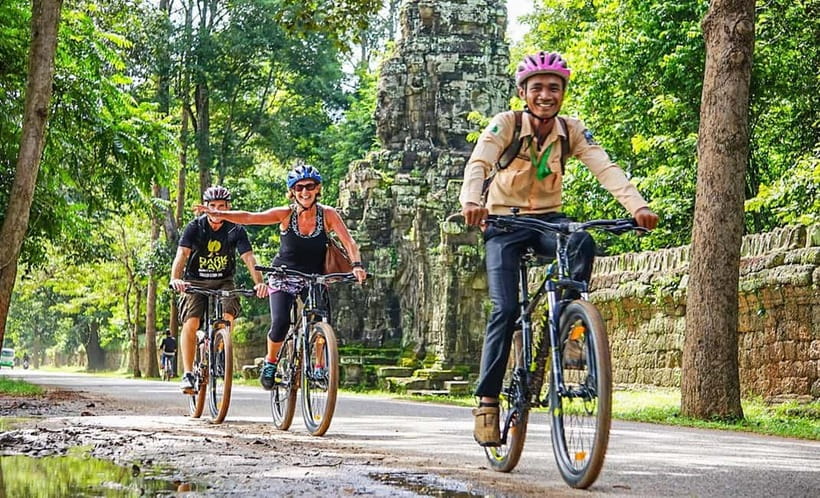
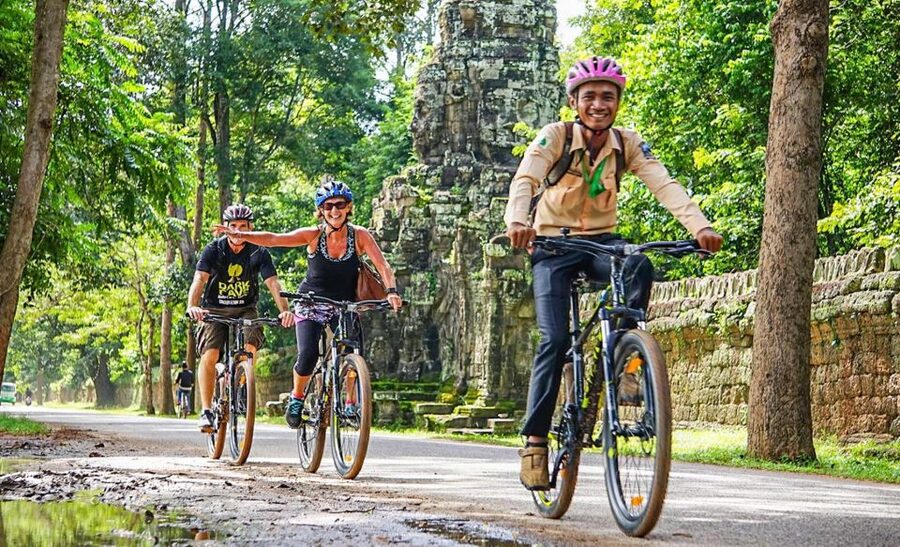
The heart of the cycling portion is the chance to see Angkor when it’s lit by the sun—without being jammed with crowds. You’ll follow a trail that takes you behind Angkor Wat, a direction most visitors don’t go.
That matters for two reasons:
- You get a quieter feel, which makes it easier to notice details in the temple silhouette and surrounding structures.
- You’re not constantly fighting foot traffic for a photo or a pause to take in the view.
The experience is also framed by religious and cultural importance. Angkor isn’t just scenery here. Your guide’s explanation helps you connect what you’re seeing with why it matters to Cambodian people, beyond the usual postcard facts.
You’ll move through the temple area using roads and paths, because the temples are closed to the public during this time. Translation: you’re still in the right zone to appreciate Angkor, but you’re not expecting to wander inside galleries like a daytime pass day.
Rural Siem Reap lanes: rice fields, narrow roads, and family plots
After leaving the busier Angkor Park flow, you head onto narrower lanes that take you past rural scenes. Expect rice fields, plus small ancestral family plots where daily life seems like it’s been going on for a long time.
This part is great if you like contrast. One moment you’re thinking about giant stone temples; the next you’re watching the human-scale world around them—paths, homes, and fields right along your route.
It also helps you appreciate why Angkor looks the way it does in this setting. The temples aren’t floating in a vacuum. They’re anchored to an inhabited landscape, even if most visitors only see the “temple view” part.
The mid-ride break: water, fresh fruit, and keeping it enjoyable
You’ll pause briefly to replenish with cold water and fresh fruit. It’s a simple stop, but it’s timed for a reason. You’re going to want your legs and brain to feel fresh again before the longer stretch of cycling and viewpoints.
I’m a big believer in small breaks on active tours. They keep the group calm, reduce the “we’re almost there” grump, and make the second half more fun instead of just endurance.
After the break, you continue toward quieter viewpoints and the roads/paths that give you a new perspective on the Angkor complex.
How the tour avoids crowds while staying in the right temple zone
A lot of tours promise fewer crowds, but you can’t always control where people already gathered. Here, the strategy is specific: you avoid the typical flow when crowds are leaving, then use narrow lanes and less traveled roads.
That’s why the timing is important. A late afternoon tour works because your route can be built around what’s happening in the park at that hour.
Also, by using official park roads and paths, you’re not taking random shortcuts. You’re staying in the right corridor to see Angkor well, while still reducing the “everyone at once” feeling that can flatten photos and patience.
Dragon boat sunset on a historic canal: the calm payoff
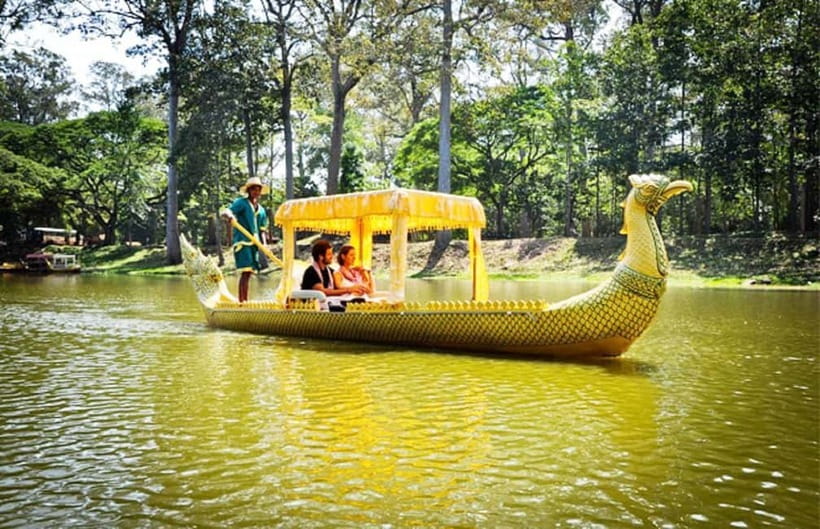
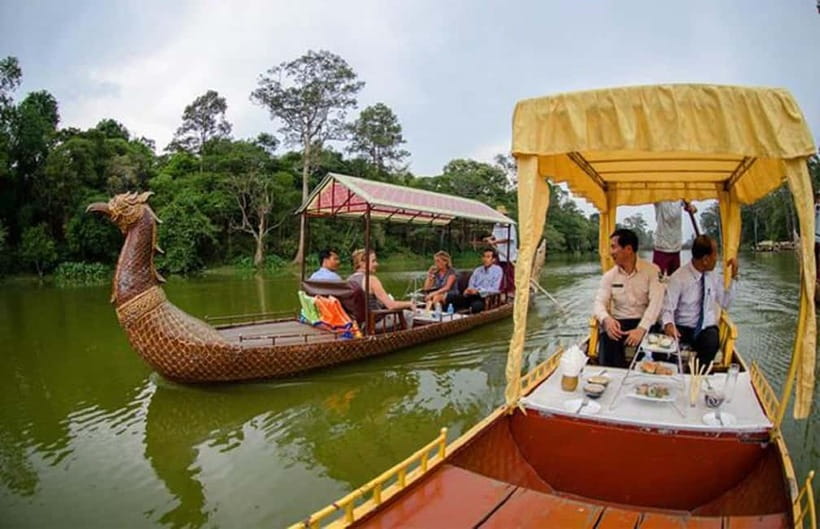
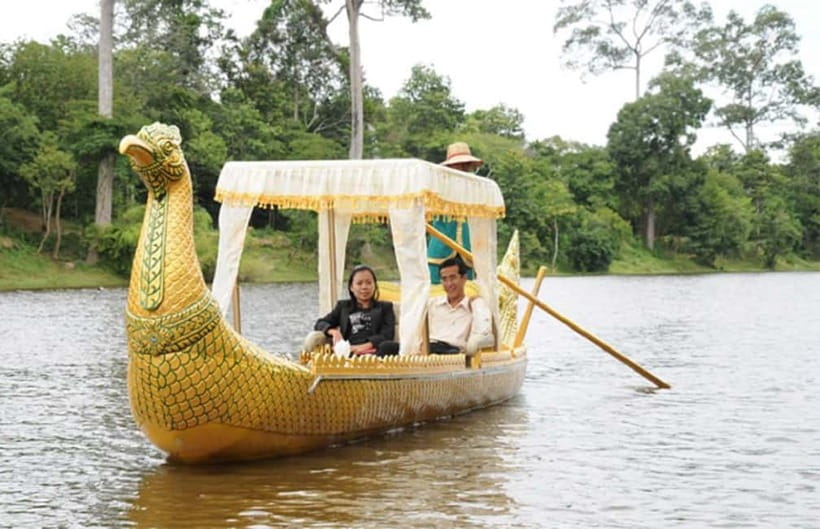
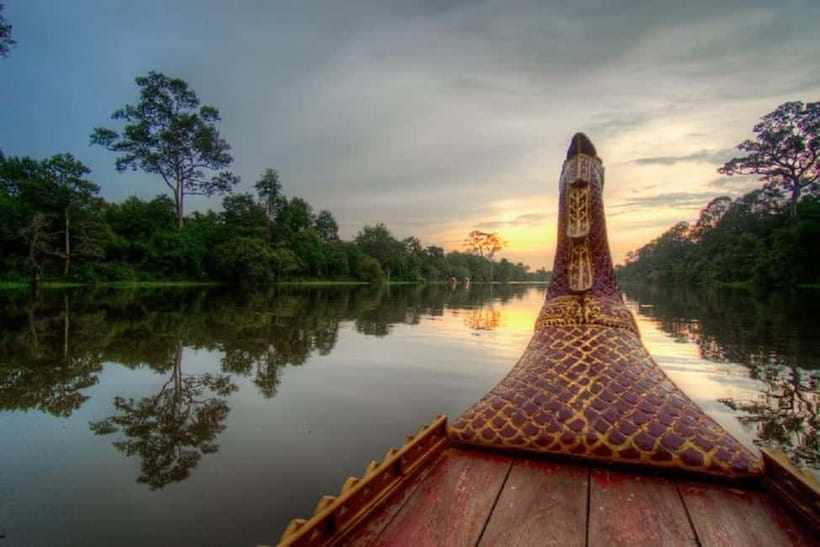
When the cycling is done, you transition to the water. The tour includes a dragon boat ride on an ancient waterway, and the vibe shifts quickly from active to relaxed.
This is also where the “evening” part feels real. As the sun sets, you’re on a boat that matches the region’s historic feel. You get time to look, not just move.
Onboard, you’ll have local snacks and drinks, including alcoholic beverages. That’s a nice detail because it turns the end of the tour into something you can enjoy even if you’re a little tired from biking.
The sunset portion is built for the eyes and the mood. You get to watch the sky change while sitting down, and the canal setting adds a softer, wider view than you get on foot.
Price and value: what $30 covers (and what you still need)
The price is listed as $30 per person, which is fairly strong value for a tour that combines multiple moving parts: hotel pickup, guide, bicycle, a support vehicle, and a dragon boat sunset cruise.
Here’s the value math in plain terms:
- You’re paying for transport + equipment + expert guide time during the hardest part of your day (late afternoon traffic and sunset timing).
- You’re also paying for the boat experience, plus snacks and drinks onboard.
- The cycling and temple-area routing is guided, so you’re not guessing where to go for the best light.
The main extra cost is the Angkor temple pass at $37, not included. If you don’t already have a pass, factor that into your budget. Think of the $30 as “the active experience day,” and the pass as “the access fee.”
Also note: the guide, helmet, and water/fruit/snacks are included, so you won’t need to hunt down rentals or buy your own basic supplies midway through.
Who should book this (and who should skip it)
This tour is best for people who like biking and can handle a longer ride. One review specifically praises it for guests who are comfortable biking lots of miles/km around the Angkor Wat area, and that’s fair warning: don’t treat this as a casual stroll with a bike.
If you want quieter Angkor views, this is a good fit. The route concept—behind Angkor Wat, then narrow lanes after leaving the busier flow—aims for a calmer sunset experience.
Who should skip it:
- Not suitable for pregnant women
- Not suitable for people with high blood pressure
- If you’re not comfortable biking for a good chunk of the afternoon, you’ll probably struggle more than you’ll enjoy it
Fit-wise, it’s a solid option for active travelers, photographers, and anyone who wants both land and water views in one half-day.
What to bring so you feel comfortable on the bike
Bring comfortable shoes (your feet will do the work), sunglasses, sunscreen, and comfortable clothes that won’t restrict your movement.
One practical tip: dress like you’ll be outdoors for a while. You’re cycling and then sitting outside on a boat for sunset, so you want layers that feel good as the light changes.
And don’t underestimate hydration. Even with cold water provided during the break, you’ll want to ride smart and slow down when the route turns.
Guide matters: why Bun’s approach makes a difference
The bike tour + sunset plan depends on the guide. In the praised experience, guide Bun is highlighted for two things: he’s kind and flexible, and his photography skills help guests reach good vantage points.
That kind of guidance is more than a nice extra. During sunset, light is changing fast. A guide who can time your stops and position you for clean temple views can make a big difference between blurry, crowded photos and the ones you’ll actually want to keep.
Bun is also described as tailoring the pace and route to make sure the group stays comfortable. That’s exactly what you want on a physically demanding afternoon.
Should you book Angkor Bike Tour & Gondola Sunset Boat?
If you want a sunset Angkor experience that feels calmer than the typical temple crush, I’d book it—especially if you enjoy cycling and don’t mind putting in some effort for the payoff. The combination of rare temple-area viewpoints plus a dragon boat sunset cruise with snacks and drinks is a smart way to spend a half day.
I’d hesitate only if biking long distances isn’t your thing, or if you fall into the health limitations listed (high blood pressure, pregnancy). This isn’t a “light activity” tour.
FAQ
What’s the tour duration?
It’s listed as 4 to 5 hours. The specific start time depends on availability.
Where does the tour take place?
It runs in Siem Reap Province, Cambodia, with pick-up from your hotel in the Siem Reap area.
How much does the tour cost?
The price is $30 per person.
What’s included in the price?
Included are hotel pickup and drop-off, support vehicle, professional English-speaking guide, bicycle and helmet, dragon boat ride, alcoholic beverages, and bottled water and local snacks.
What’s not included?
You’ll need an Angkor temple pass, listed at $37, plus any personal expenses.
Do I need to buy a temple pass in advance?
The temple pass cost is provided, but whether you buy it in advance or on-site isn’t specified. Plan for the $37 cost.
What time does the tour start?
You’ll see the starting times when you check availability.
How do hotel pick-ups work?
Your guide and driver will pick you up from your hotel about 30 minutes before departure. You should provide your hotel address clearly or provide hotel contact details.
Is the tour suitable for everyone?
It’s not suitable for pregnant women or people with high blood pressure. It also involves cycling, so comfortable biking is important.
What should I bring?
Bring comfortable shoes, sunglasses, sunscreen, and comfortable clothes.