REVIEW · KRAKOW
1 Hour Traditional Gondola Sightseeing Vistula River Cruise
Book on Viator →Operated by Aqua Fun Cruises Krakow · Bookable on Viator
One hour on the Vistula changes Krakow fast. This traditional wooden gondola glides past major landmarks from the water, with Polish-English audioguide commentary so you can follow what you’re seeing. I especially liked the 12-person, folk-built boat feel and the calm, close-up views of Wawel and the river bridges.
The main catch is simple: you’re on the river for about an hour, so you’ll get a highlights loop more than a full tour of Krakow’s top sights.
In This Review
- Key things I’d bet on
- A folk-built gondola that feels like Krakow
- Meeting at Barka Mauretania, plus what to do before you board
- Kazimierz river views: the oldest bridge and Church On the Rock
- Grunwaldzki and the Wawel Hill moment
- Dębnicki Bridge, then green river stretches toward Zwierzyniec
- Rudawa’s role and the feel of a living river
- Monasteries, Dębniki’s craft past, and the wave-shaped Manggha
- Podgórze history and Father Bernatek’s footbridge
- Cricoteka connections: the Museum of Tadeusz Kantor by the river
- Back to Kazimierz: the mixed cultures feel you can actually see
- Price and value: what you really get for $17.80
- Timing tips: when to go for calmer vibes and better photos
- Should you book the 1-hour gondola cruise?
- FAQ
- How long is the Vistula River gondola cruise?
- Where do we meet for the cruise?
- What’s included in the ticket price?
- Are drinks or food included?
- Is there a restroom on the boat?
- What languages is the commentary in?
Key things I’d bet on
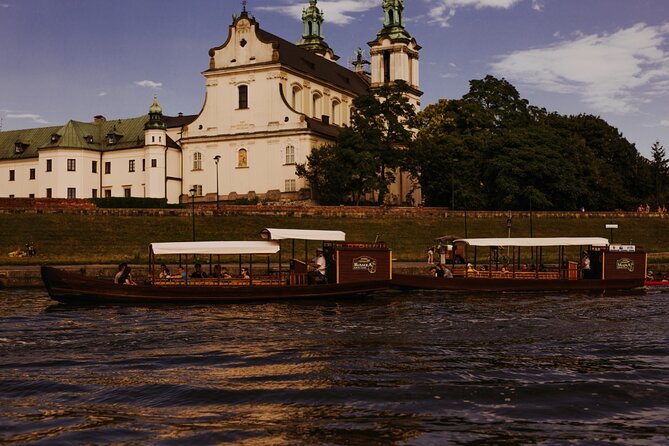
- Traditional wooden gondola built from spruce or oak, designed in historical patterns
- Small-group feel (up to 24 travelers) that makes the ride feel unhurried
- Big Wawel views from the river plus multiple bridges for great angles
- Kazimierz to Podgórze route with different neighborhoods and time layers
- Audio commentary in Polish-English plus clear onboard guidance from the captain
- Bring-your-own comfort plan: the boat is relaxing, but there’s no restroom onboard
A folk-built gondola that feels like Krakow
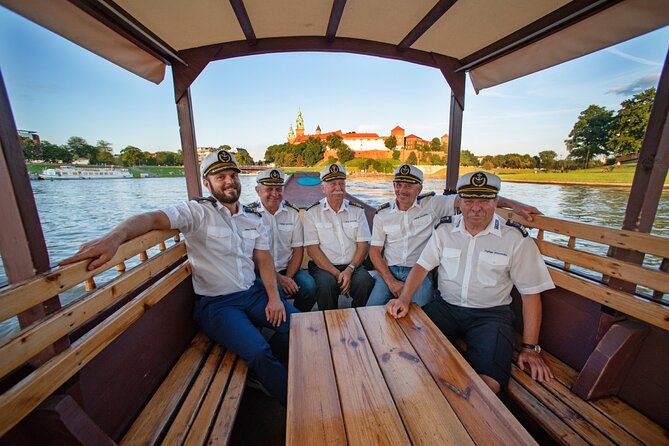
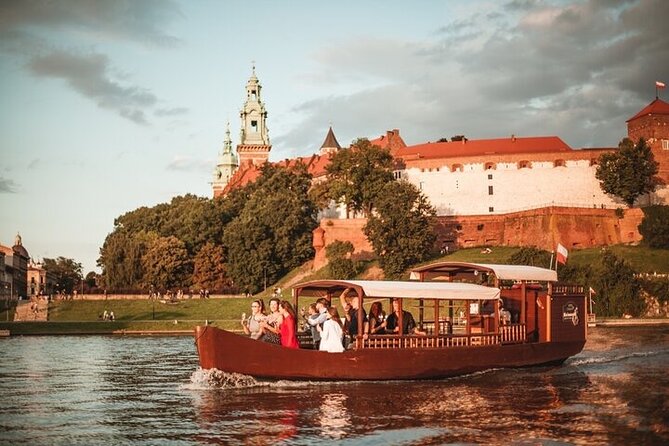
This cruise doesn’t use a modern party boat. You ride in a traditional wooden gondola-riverboat made entirely of wood by Polish folk boatbuilders, using historical patterns of spruce or oak, plus modern wood preservation and safe connections. That matters because the ride feels steadier and more intimate, not like you’re just packed onto a sightseeing platform.
There’s also a practical comfort side. You’ll find plenty of seating, including a top deck area that’s ideal for sightseeing. One review even mentioned blankets, which is a nice detail if you’re doing it later in the day or the wind off the river gets chilly.
You can also read our reviews of more tours and experiences in Krakow.
Meeting at Barka Mauretania, plus what to do before you board
You meet at Barka Mauretania on Bulwar Kurlandzki 137/7. The tour starts there and ends back at the same dock, so you’re not stuck figuring out how to get elsewhere after your cruise.
You’re also close to the action. The dock area is set up for easy access, and you can grab a drink before boarding—there’s mention of drinks being served at the start point (and you can bring along coffee or a cold drink). One small heads-up: there’s no restroom on the boat, so plan to use facilities at the dock before you sail.
Kazimierz river views: the oldest bridge and Church On the Rock
Right away, you’re in the Kazimierz old-town orbit. The route begins with a bridge crossing between Kazimierz and Podgórze. This particular bridge is notable because it’s the oldest complete road bridge in Krakow over the Vistula River that still stands today.
Next up is a stop for Church On the Rock—St. Michael and St. Stanislaus the Bishop and Martyr. The highlight here is the Three Millennium Altar, which you can see in the church’s garden. Even if churches aren’t your priority, this is one of those moments where the river angle makes a familiar building feel new.
Why this part works: it shows you Krakow’s layered geography fast. You’re not just looking at one landmark—you’re watching neighborhoods slide by, with bridges acting like checkpoints.
Grunwaldzki and the Wawel Hill moment
As you continue, you pass the Grunwaldzki Bridge, which links the Old Town with Podgórze. It’s also paired with water tram stops on both banks, which gives you a sense of how connected the river is to daily movement around the city.
Then comes the big one: Wawel Hill with the Royal Castle. Wawel sits on a bend of the Vistula, making the river an ideal stage. This is why this cruise is popular for first-timers and time-crunched visitors: from the water, the castle doesn’t feel distant or crowded. It looks like it belongs to the city in a different way.
One real consideration: Wawel is the strongest river-facing payoff, but not every Krakow sight is directly on the water. So think of this as a guided river perspective—especially good for the parts that actually face the river.
Dębnicki Bridge, then green river stretches toward Zwierzyniec
You’ll also see the Dębnicki Bridge, which in its current form was built in 1951. Knowing that number helps you place what you’re looking at: this isn’t just “old city sightseeing,” it’s also Krakow’s modern waterfront engineering.
After that, the cruise starts to shift from city edges to softer views. Zwierzyniec stretches between the Vistula and the Rudawa rivers and is one of Krakow’s green areas. From the deck, this feels like a breath of air in the middle of the city.
Then you hit Salwator, including the area of the former Zwierzyniec village. Here you’ll get views of the Kościuszko Mound—a landmark that often looks more symbolic than functional from land, but reads more clearly when you can see how the city folds around it.
Rudawa’s role and the feel of a living river
As the route continues, the Rudawa River appears as a tributary of the Vistula. The key detail is that it’s one of Krakow’s drinking water sources. That’s not something you’d guess from a casual stroll, but from the boat it gives the water a more serious role in the city’s everyday life.
This part of the cruise also tends to feel less urgent. The pacing helps. With only about an hour total, you want the ride to do something different than walking—and this stretch does. It’s calmer, more scenic, and it breaks up the “all buildings, all the time” rhythm.
Monasteries, Dębniki’s craft past, and the wave-shaped Manggha
Back near landmark territory, you’ll come across the Monastery of the Norbertan Sisters. The current look comes from a major reconstruction in the 17th century during the time of Ksenia Dorota Kątska. There’s also a motto connected to the order: One heart, one soul in God.
After that, the river brings you past Dębniki, which traces back to the former village of Dębniki. Historically, craftsmen lived there who made tannins for dressing leather and dyes for dyeing fabrics. It’s a reminder that the river wasn’t just scenic. It powered and supported real work.
Then you’ll see the Manggha Center of Japanese Art. It’s a modern building with a shape that resembles a wave on the Vistula. It also ties into a simple story: a house for a Japanese art collection, created according to the founders’ idea. From the water, that wave shape feels more intentional and less like a random modern landmark.
Podgórze history and Father Bernatek’s footbridge
The cruise continues into Podgórze, the right-bank part of Krakow. It dates to the city of Podgórze founded at the end of the 18th century, and there were human settlements earlier too, going back to Paleolithic and Neolithic periods due to flint deposits.
One of the most photo-friendly segments is Father Bernatek’s footbridge. It’s a pedestrian and bicycle bridge across the Vistula that connects Kazimierz with Podgórze, built on the site of the former Podgórze Bridge. It’s known as a bridge of lovers, which is exactly the kind of city detail you notice more on water than on foot.
If you like “small story landmarks,” this is where the cruise turns from architecture viewing into urban culture.
Cricoteka connections: the Museum of Tadeusz Kantor by the river
Not far from that, you pass the Museum of Tadeusz Kantor, located in the former building of the Podgórze power plant. The museum’s role is tied to promoting Kantor’s work across theater and visual arts, through Cricoteka.
This is a good stop to remember because it’s not a castle or a church. It’s art and performance tied to a working industrial building. The river angle helps you see how Krakow repurposes spaces over time.
Back to Kazimierz: the mixed cultures feel you can actually see
On the way back, you spend time with Kazimierz again. This district was an independent city from the 14th century to the early 19th century, south of Krakow. Today it’s part of the Old Town where Jewish and Christian cultures intersect.
From the deck, that intersection reads less like a textbook theme and more like a lived neighborhood character. Even when you can’t pause and explore every street, the cruise gives you a sense of where each neighborhood sits and how it relates to the river.
Then you return to where you started at Barka Mauretania.
Price and value: what you really get for $17.80
At $17.80 per person, this cruise is one of the cheaper ways to do a structured Krakow experience without tiring yourself out. It’s a full 1 hour Vistula River cruise plus Polish-English audioguide commentary—so you’re not guessing what you’re looking at as you pass bridges, hills, churches, and modern landmarks.
What it doesn’t include is also important. Food, coffee, and tea aren’t included in the price. You can grab drinks at the start point, and you can take a coffee or cold drink with you, but plan on bringing your own snacks if you want them.
Where the money feels most worth it: if you’re trying to see Wawel and multiple neighborhoods in a short window, this tour delivers that “several highlights in one trip” effect. It also tends to be a great add-on after a museum-heavy morning—just enough time to relax, not enough time to feel trapped in a schedule.
Timing tips: when to go for calmer vibes and better photos
This cruise is built for a relaxed pace, and that shows in the ride feel. The wind can be a factor, so even if it’s warm outside, bring something for cooler deck time. If you’re doing an evening slot, you’ll likely want the top deck early since seating is a common “grab first” moment.
Also, if you can choose between day and later departures, consider an evening option. One key tip from the experience is that the sights can look very different at sunset compared with daylight and even after dark, so you get more variety than you’d expect from just one hour on the river.
Should you book the 1-hour gondola cruise?
Yes—if you want a low-effort, high-comfort way to see Krakow from a new angle. I’d book it if you’re a first-timer who wants Wawel from the Vistula, plus a guided tour of bridges and both sides of the river without walking all day.
Skip or at least add a backup plan if you expect a deep, stop-and-go city tour. This is a river highlights route, and much of Krakow’s big stuff sits back from the water. You’ll get the best payoff from the river-facing landmarks and the neighborhood shapes, not a full coverage sweep.
FAQ
How long is the Vistula River gondola cruise?
It’s approximately 1 hour.
Where do we meet for the cruise?
You board at Barka Mauretania, Bulwar Kurlandzki 137/7, 31-061 Kraków, Poland, and the tour ends back at the same meeting point.
What’s included in the ticket price?
The ticket includes the 1 hour Vistula River cruise and a Polish-English audioguide commentary.
Are drinks or food included?
Coffee and/or tea and food and drink are not included. Drinks are available at the start area, and you may bring coffee or a cold drink with you.
Is there a restroom on the boat?
No restroom is available on the boat, so it’s best to use facilities at the dock before boarding.
What languages is the commentary in?
The audioguide commentary is in Polish and English.