REVIEW · VENICE
Venice Walking Tour and Gondola Ride
Book on Viator →Operated by ROMAETRAVEL · Bookable on Viator
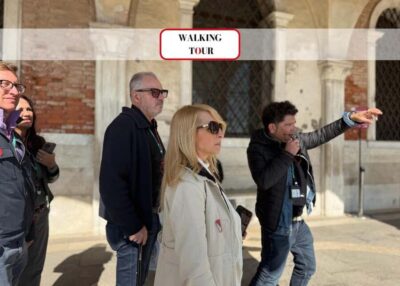
Venice in one tidy loop saves your feet. This walking tour threads together Saint Mark’s Square and Doge’s Palace, then finishes with a traditional gondola ride on the Grand Canal. It’s a classic combo for first-timers who want big sights without spending hours mapping it all.
I love the way the guide turns the landmarks into stories you can actually follow while you’re standing there. I also love the built-in time for side streets and footbridges, which makes Venice feel like more than just postcard stops, especially around the main central areas.
One caution: this is a packed route in a busy city, and you may feel pacing (or crowd pressure) at times, especially if you want long, slow photo breaks.
In This Review
- Quick hits to know before you lace up
- Why the Saint Mark’s–Rialto loop works so well
- Price and value: what $185.38 buys you (and what it doesn’t)
- Meeting at Santa Lucia: the easiest way to start strong
- Canal Grande: Venice’s main water street, explained in plain terms
- Piazza San Marco and the Campanile area: how to not get overwhelmed
- Torre dell’Orologio and Ponte dei Sospiri: clockwork drama and prison corridors
- Rialto Bridge and Doge’s Palace: from the common street to the government floor
- Teatro La Fenice and the Venetian Lagoon setting
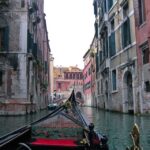
- Gondola ride timing: what to expect on the water
- Small-group pacing: how to keep control in a city of crowds
- Who this tour is for (and who should skip it)
- Should you book this Venice walking tour and gondola ride?
- FAQ
- How long is the Venice walking tour with gondola ride?
- Where do you meet for the tour?
- When does the tour end?
- What is included in the price?
- Is a gondola ride included?
- Are museum or attraction tickets included (like St Mark’s or Doge’s Palace)?
- What group size should I expect?
- Is this a mobile-ticket experience?
- Is there an extra access fee for some visitors?
- What is the cancellation policy?
- Is the booking guaranteed even if only one person books?
Quick hits to know before you lace up
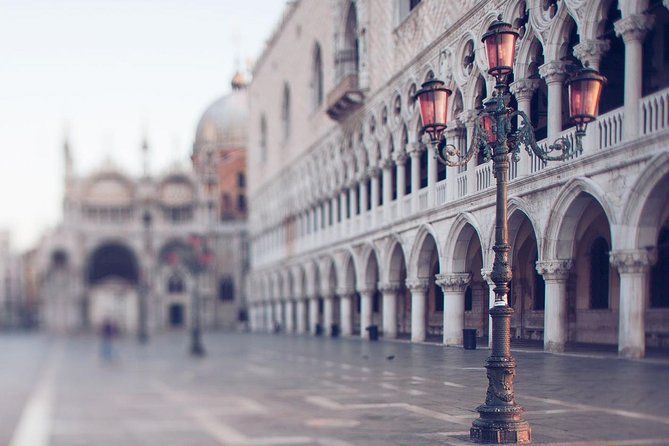
- A classic Venice best-of route: Saint Mark’s Square, Rialto Bridge, and Doge’s Palace are all on the menu.
- Traditional gondola time on the Grand Canal: you’re not just watching—your group gets on the water.
- Small-group feel: it’s capped at a small size (listed up to 14, with this activity noted as a maximum of 8).
- Good for first-time orientation: your guide helps you understand what connects where in the city center.
- Tickets for big interiors are not included: you’ll see key architecture even if you don’t pay for every museum stop.
- Mobile ticket convenience: you’ll use a phone ticket for this experience.
Why the Saint Mark’s–Rialto loop works so well
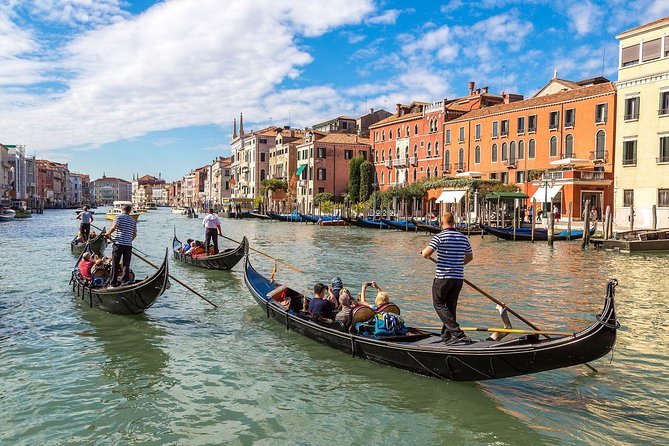
If you’ve only got a few hours in Venice, this tour gives you a practical storyline. You start near the city’s main “street” on the water—the Grand Canal—then shift into the land-based heartbeat around Saint Mark’s Square. From there, you move through bridges and power spots, ending with an area linked to Venice’s artistic life at Teatro La Fenice.
The big win is flow. Venice is confusing on purpose (in a charming way). A guide-led route means you spend your time learning the city’s layout instead of guessing which turn puts you back toward the action.
And because the group is small, you’re less likely to get separated by the crowd. That matters when you’re trying to hear explanations and still keep up through tight lanes.
You can also read our reviews of more tours and experiences in Venice.
Price and value: what $185.38 buys you (and what it doesn’t)
At $185.38 per person for about 3 hours, the value is mostly in two things: (1) guided storytelling across several headline landmarks, and (2) a traditional gondola ride included in the price.
What’s not included is just as important. Entry to major interiors—like Basilica di San Marco / Campanile area and Doge’s Palace—is listed as not included. That means you’re paying for the walking, the guide, and the gondola, not for full museum access at every stop.
Here’s the honest way to think about it: if you’re spending money anyway on a gondola, adding a structured walk that also covers Rialto and Doge’s Palace can be a solid deal—especially for first-time visitors who want context fast. If you plan to skip indoor tickets most of the time, this format still makes sense. You’ll get the setting and the key architecture from the outside and from the guide’s explanations.
Also note demand. This tour is typically booked about 97 days in advance on average, so if your dates are fixed, book early and keep an eye on timing.
Meeting at Santa Lucia: the easiest way to start strong
You meet at Stazione di Venezia Santa Lucia. That’s a great anchor point if you’re arriving by train, and it keeps you near public transportation from the start. The tour also ends back at the meeting point, which reduces the stress of wondering how you’ll get back later.
One practical tip based on what can happen in Venice: take a screenshot of any meeting instructions and keep your phone charged. There’s a recurring problem in this city when groups are late or unsure where to meet—tight lanes and crowded areas don’t forgive confusion.
Good to know: the company uses a mobile ticket, so have your confirmation accessible on your phone.
Canal Grande: Venice’s main water street, explained in plain terms
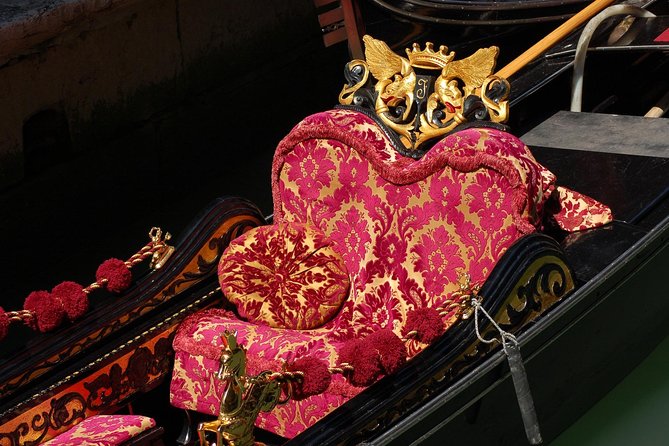
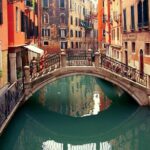
The route begins at Canal Grande, Venice’s most important “street” that you’d follow by ferry or gondola. It’s not just scenery; it’s the city’s organizing principle. The canal divides the center into two parts, and the city’s layout follows the shape of the water.
Here are the numbers that make it easier to picture what you’ll later ride:
- It’s about 3.8 km (2.4 miles) long
- 30 to 90 meters wide
- Average depth around 5 meters (16 feet)
You’ll also hear how the canal’s shape connects different districts (sestieri): one end heads toward the lagoon near Santa Lucia railway station, while the other leads into the basin at San Marco.
This stop matters because it sets up the gondola ride. When you understand where the canal connects, the ride feels less random and more like a moving map.
Piazza San Marco and the Campanile area: how to not get overwhelmed
Next comes Piazza San Marco (St Mark’s Square), Venice’s principal public square—often just called la Piazza. It’s the social, religious, and political center, so it’s where Venice looks the most official and ceremonial.
A helpful detail you’ll likely hear: Venice doesn’t call all open spaces squares. Most are campi (fields), and then there’s the Piazzetta as the extension toward the lagoon. That language helps you read signs and understand locals’ map-making habits.
From here, you’ll spend time in the Campanile di San Marco area and the broader cathedral zone of Basilica di San Marco. The building’s structure dates back to the late 11th century, and the famous main façade roofline leans into Gothic styling. This is one of those places where standing in the square gives you scale that photos can’t.
One consideration: Campanile/Basilica entry isn’t included, so if you want to go inside, you’ll need separate planning and time. Even if you skip interiors, this segment is still worth it for orientation and architecture.




Torre dell’Orologio and Ponte dei Sospiri: clockwork drama and prison corridors
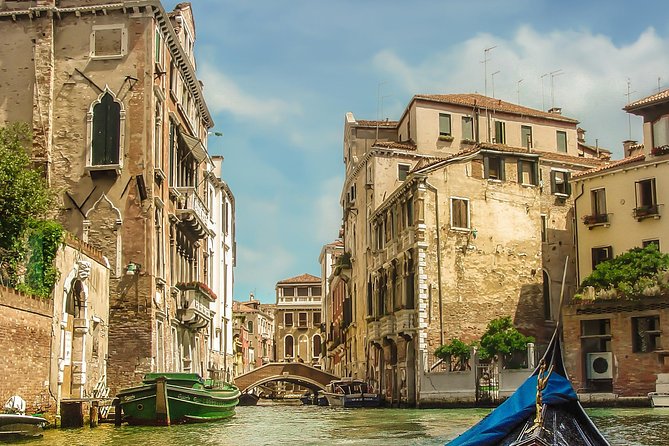
After the square, the tour heads to the Torre dell’Orologio, the Clock Tower on the north side of Piazza San Marco near the entrance to Merceria. It’s an early Renaissance building with a tower holding the clock and smaller adjoining structures on each side. It also connects to Procuratie Vecchie.
Then you’ll reach Ponte dei Sospiri—the Bridge of Sighs. This one is famous for a reason: it was built in 1602 using white Istrian stone to connect Palazzo Ducale to the new prison buildings (Prigioni Nuove). Unlike open bridges with views, this bridge is mostly about what’s hidden. It’s covered by design and formed by two corridors separated by walls—so it tells a story of movement and confinement, not scenery.
Because this tour mixes major sights with the route’s smaller bridges, you’ll often feel like you’re getting a guided walk through Venice’s “timeline,” not just a list of photo stops.
Rialto Bridge and Doge’s Palace: from the common street to the government floor
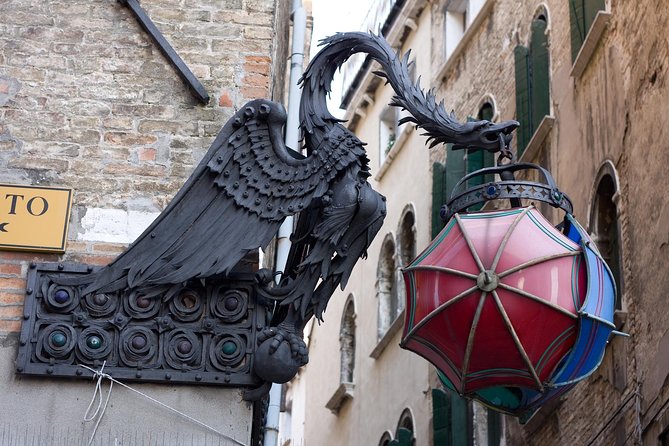
At Ponte di Rialto, you’ll learn why this bridge is such a big deal. Venice has about 354 bridges, but Rialto is the oldest of the four spanning the Grand Canal. It connects San Marco and San Polo, two key sestieri in the city center.
You’ll also hear the bridge has been rebuilt multiple times over the centuries: it originally used older ships, then moved to a wooden structure, and the version you see today is from 1591.
From there, the tour goes to Doge’s Palace, one of Venice’s most recognizable landmarks. This is Venetian Gothic style architecture, and it served as the residence of the Doge—the supreme authority of the former Venetian Republic. As a museum since 1923, it’s now part of the civic museum network run by Fondazione Musei Civici di Venezia (one of 11 museums).
Here’s a practical value point: even if you don’t go inside, the guide’s framing helps you understand what you’re looking at. Doge’s Palace isn’t just a pretty building; it’s the visual center of how Venice organized power.
Again, Doge’s Palace admission is not included, so if museum time is a must, budget for a separate visit later.
Teatro La Fenice and the Venetian Lagoon setting
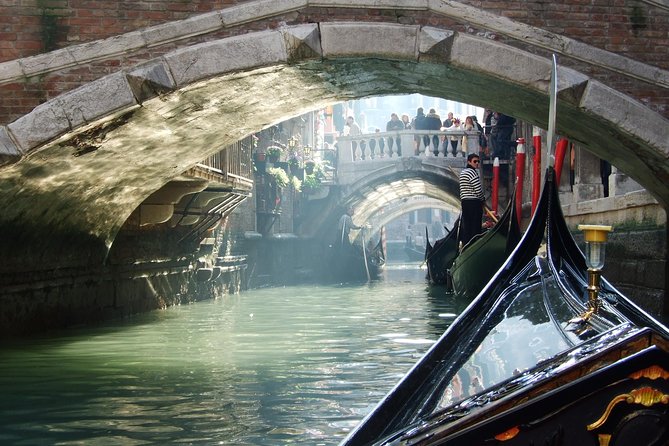
The tour finishes with time at Teatro La Fenice, one of Italy’s most renowned opera houses. It’s tied to major premieres in the 19th century, with performances by famous bel canto composers such as Rossini, Bellini, Donizetti, and Verdi.
You won’t be buying an opera ticket here, but you’ll get the cultural context. Venice takes its arts seriously, and this stop helps connect the city’s political importance (Doge’s Palace) with its performance culture (La Fenice).
The tour also references the Venetian Lagoon as Venice’s sheltered water setting in the Adriatic. Even if you don’t spend long there during the walking loop, it’s a useful mental frame for understanding why Venice looks like it does: water isn’t scenery—it’s infrastructure.
Gondola ride timing: what to expect on the water
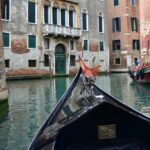
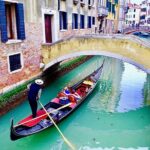
A major reason to book this tour is simple: you get on the gondola, not just near it. Since this is built into a timed group program, the ride works best if you’re on time and ready to move when your guide signals.
One honest heads-up from experience with gondola setups: not every gondola experience is identical. In some cases, the ride may not include the singing-style experience that people hope for, and in other cases, audio tech or microphones can interfere with what you hear during the walking portion.
That doesn’t ruin the day, but it does change how well you’ll catch every spoken detail. If you care about hearing everything, stand near your guide and keep your phone away during explanations.
Also, the route can include practical help navigating onward transit. In at least one case, a guide assisted with getting people onto the water taxi or the people mover system after the tour. It’s a nice extra if you’re continuing your day in Venice right away.
Small-group pacing: how to keep control in a city of crowds
This tour can feel brisk because Venice makes you share space. The pace issues show up most when people want extra photo time or if someone in the group slows down. Some guides handle this smoothly, and others run faster than you’d like—so plan to be flexible.
Here are ways to make it work in your favor:
- Wear comfortable shoes you can walk in for a while on uneven stone.
- Keep your water and small items packed so you don’t lose time digging.
- If you want to buy extra tickets for places like Basilica/Campanile or Doge’s Palace, think about doing those on a separate, less time-pressured day.
One more thing: there have been occasional issues when meeting details aren’t clear enough for late arrivals. To protect yourself, confirm the meeting instructions ahead of time and aim to arrive early.
Who this tour is for (and who should skip it)
This Venice walking tour with gondola ride fits best if you:
- Are in Venice for the first time and want fast orientation around Saint Mark’s, Rialto, and Doge’s Palace
- Want a guided route so you don’t waste precious time threading the streets alone
- Appreciate classic sights plus at least one slow moment on the water
You might want a different plan if you:
- Hate tight schedules and need long rests between stops
- Want guaranteed interior museum time at multiple sites within one session
- Need very quiet narration and lots of space to hear
Should you book this Venice walking tour and gondola ride?
I’d book it if your priority is a structured, iconic Venice day that gets you onto the gondola without extra planning headaches. The best part is the pairing: you walk through the political and architectural highlights, then you reset your senses on the Grand Canal.
I would not book it if you’re hoping for a leisurely walk with lots of museum entry time. Campanile/Basilica and Doge’s Palace are not included, and the schedule is tight enough that pacing can feel like part of the experience.
If you go in expecting a well-run “Venice highlights” loop—with the gondola as the payoff—you’ll feel like you spent your time wisely.
FAQ
How long is the Venice walking tour with gondola ride?
It runs about 3 hours (approx.).
Where do you meet for the tour?
The start point is Stazione di Venezia Santa Lucia, 30121 Venice, Metropolitan City of Venice, Italy.
When does the tour end?
The activity ends back at the meeting point.
What is included in the price?
Included: guided tour, traditional gondola ride, and a small group (limited).
Is a gondola ride included?
Yes, the tour includes a traditional gondola ride.
Are museum or attraction tickets included (like St Mark’s or Doge’s Palace)?
No. Admission is not included for stops such as Campanile di San Marco / Basilica area, Torre dell’Orologio, and Doge’s Palace, and Teatro La Fenice.
What group size should I expect?
The experience is described as a small group limited to maximum of 14 in the overview, and it also notes a maximum of 8 travelers for the activity.
Is this a mobile-ticket experience?
Yes. The tour uses a mobile ticket.
Is there an extra access fee for some visitors?
On certain dates, visitors staying outside of Venice may need to pay a €5 access fee. Check https://cda.ve.it for which days apply and exemptions.
What is the cancellation policy?
You can cancel for a full refund up to 24 hours before the experience starts. Less than 24 hours before start time is not refunded.
Is the booking guaranteed even if only one person books?
A minimum of 2 people per booking is required.