REVIEW · VENICE
Venice: Private Walking Tour with Optional Gondola Ride
Book on GetYourGuide →Operated by Venice Events srl · Bookable on GetYourGuide
Venice is best when you walk slowly. This private route keeps you off the worst tourist trails and mixes big-city landmarks with quiet backstreets and an optional gondola. You get a guide who can connect the architecture, the canal geography, and everyday Venetian life so the city starts making sense fast.
What I like most is the way the tour handles the big sights without turning them into a checklist. You’ll get the story behind Teatro La Fenice and its dramatic rebuilding, and then you’ll spot the Bovolo Staircase in a tiny courtyard where it feels like you found it by luck.
One thing to think about: this experience is designed for exterior views only. If you’re hoping for inside museum time or ticketed attraction stops, you’ll need to book something separate.
In This Review
- Quick Hits You’ll Actually Care About
- Venice Without the Crush: How This Private Walk Feels
- Meeting at Museo Correr: Getting Started in St Mark’s Square
- Teatro La Fenice: The Fire, the Rebuild, and the Meaning of the Site
- Palazzo Contarini del Bovolo: Finding the Snail Staircase
- Rialto Bridge Views: Where the Canal Story Gets Real
- Learning Venetian Dialect and the Big Reasons Venice Changed
- The Street Route: Calle Life, Hidden Corners, and Why It Feels Local
- Optional Gondola Ride: 30 Minutes on the Canal, Starting at Santa Maria del Giglio
- Duration and Pace: A Tour That Fits a Real Day
- Price and Value: What You’re Paying For at $150.10
- Who Should Book This Private Walk (and Who Might Want Something Else)
- Should You Book This Venice Private Walk with Optional Gondola?
- FAQ
- How long is the Venice Private Walking Tour with Optional Gondola?
- Where does the tour start?
- Does the tour include museum or attraction entry inside?
- What is included with the gondola option?
- What languages are available for the live guide?
- Is this tour suitable for wheelchair users?
Quick Hits You’ll Actually Care About
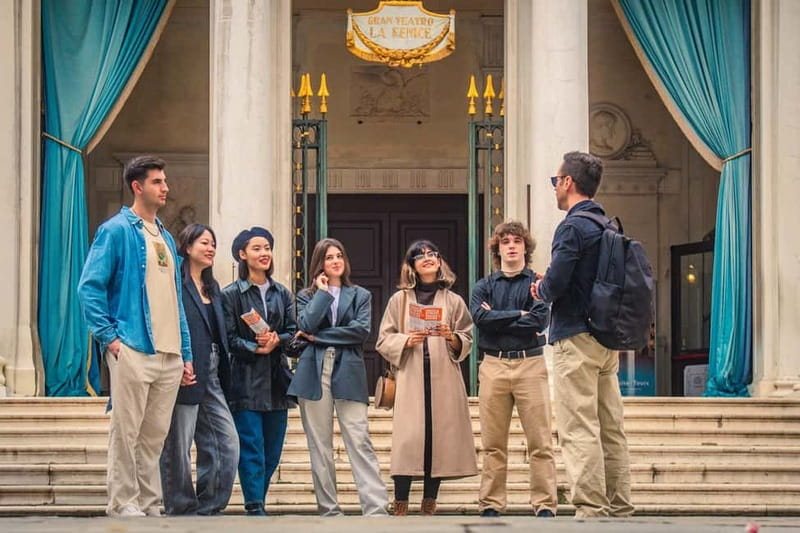
- Small-group feel on a private guided walk that’s planned to be calmer than the main crowd routes
- La Fenice, Bovolo Staircase, and Rialto Bridge are the anchor stops, with extra context on the way
- You learn how Venice works: the Venetian dialect, how the city was shaped, and why it faces major practical challenges
- Optional 30-minute gondola starts at Santa Maria del Giglio near the Gritti Palace Hotel, and it does not include a guide
- No inside visits to museums or attractions, so plan accordingly if interiors matter to you
Venice Without the Crush: How This Private Walk Feels
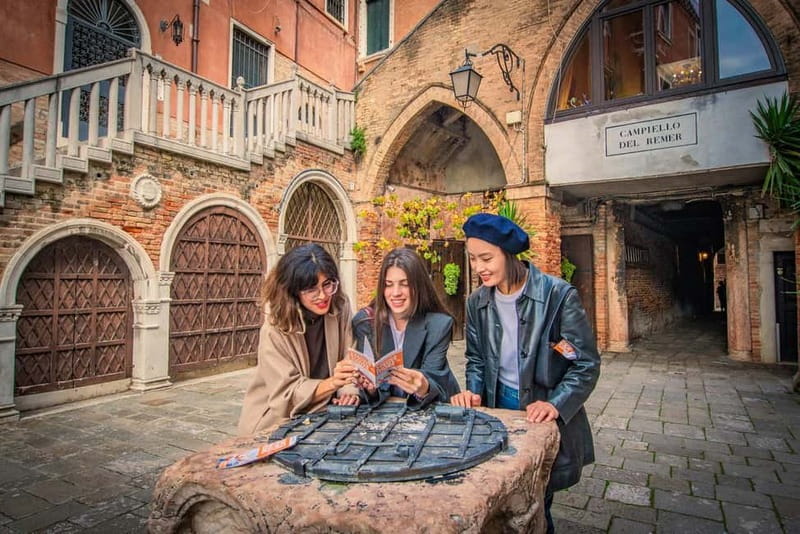
Venice can overwhelm you in about five minutes. The trick is not seeing less—it’s seeing with breathing room. This tour is built around a guided walk away from the main tourist sites and crowds, so you can actually take in what’s around you.
The pace matters too. It’s scheduled for roughly 2 to 2.5 hours, which is long enough for real connections (architecture, street layout, canal logic) but short enough that you’re not dragging yourself across Venice by late afternoon.
This is also the kind of format where you can ask questions and get answers that fit what you’re looking at right then. If your guide is someone like Gianni, the energy is practical and focused, not just recital mode.
You can also read our reviews of more tours and experiences in Venice.
Meeting at Museo Correr: Getting Started in St Mark’s Square
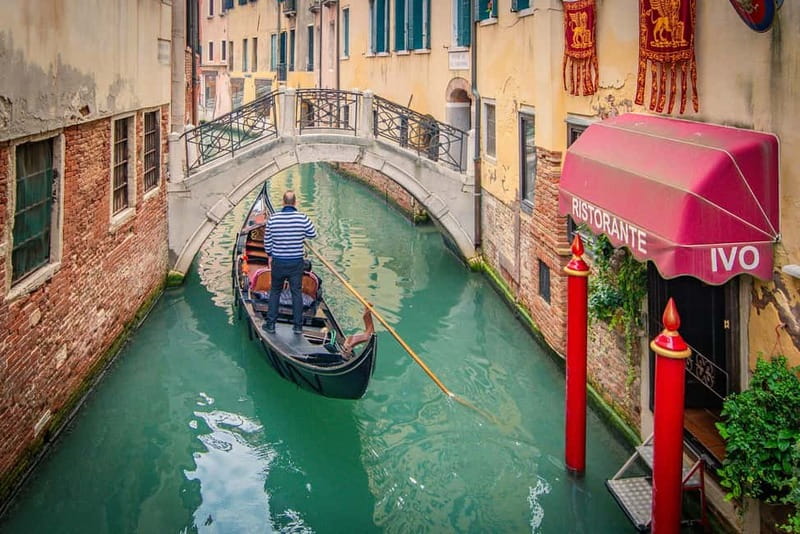
The meeting point is St Mark’s Square, under the arches at the Correr Museum. A staff assistant holds an orange umbrella, so you can spot them quickly instead of wandering around the square guessing.
If you arrive by vaporetto, get off at the Vallaresso stop on lines No: 1 or No: 2. Then it’s a straightforward walk: down Calle Vallaresso, passing Harry’s Bar on your right and the Hotel Monaco and Grand Canal area on your left. At the end of the street, turn right toward St Mark’s Square, bear left before the arches, then go right under the arches in front of the post office and into the square to the Correr Museum entrance.
If you’re arriving on foot, it’s simpler: just go into St Mark’s Square and head to the Correr Museum area under the arches on the opposite side from the church.
Tip for your feet: bring comfortable shoes. Venice punishes sandals and optimism equally.
Teatro La Fenice: The Fire, the Rebuild, and the Meaning of the Site
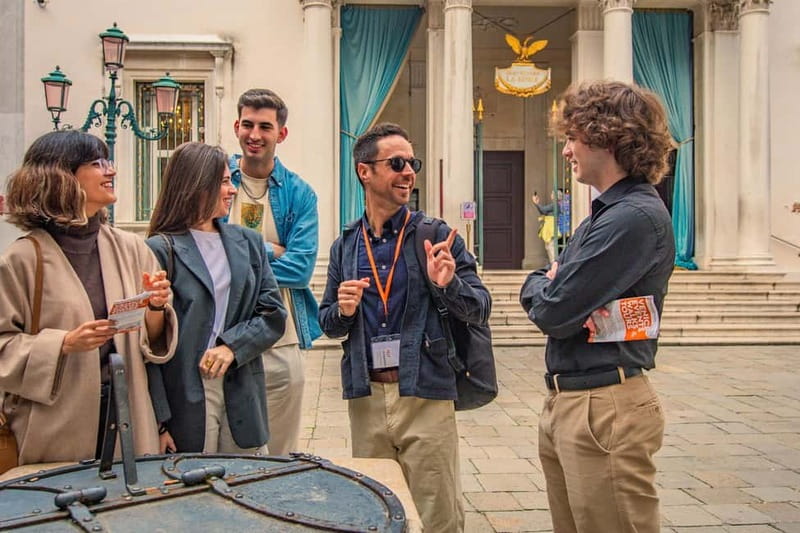
The tour’s first major landmark stop is Teatro La Fenice. Even if you don’t care about opera on paper, the place matters in a very Venetian way. You’ll hear how the theatre burned down and was later rebuilt to its original glory—and why a city like Venice treats cultural buildings as more than entertainment.
Here’s what you’ll likely appreciate as a visitor: the guide connects what you’re seeing with why it was built that way. Venice didn’t grow into its grand style by accident. It evolved around trade, power, and status, with architecture responding to local needs and the realities of water.
If you like your sightseeing with a storyline, this is where the tour starts working. You’re not just looking at a facade—you’re learning how Venice thinks.
Palazzo Contarini del Bovolo: Finding the Snail Staircase
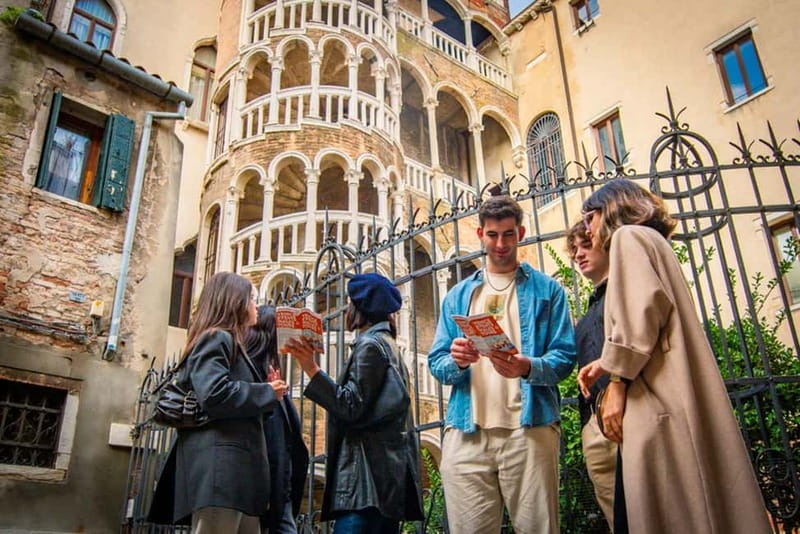
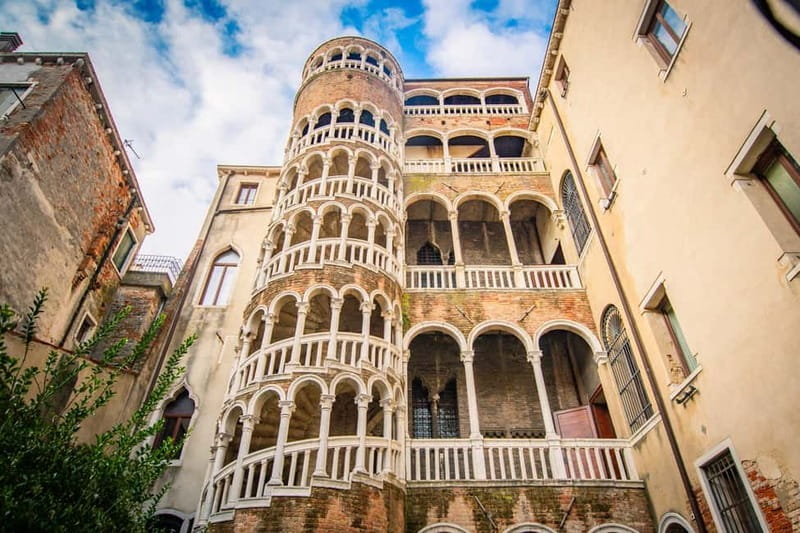
Next up is Palazzo Contarini del Bovolo, and specifically the ornate Bovolo spiral staircase, nicknamed the snail. This is the kind of sight that you’d miss if you were walking on your own at normal tourist speed. It sits in a tiny courtyard, tucked away where the outside of the palace doesn’t scream for attention.
The staircase is a strong lesson in how Venetian design reads like a puzzle. The guide helps you understand the logic behind the structure—how the geometry and placement fit the setting—so it stops feeling decorative and starts feeling purposeful.
Also, this stop is great for photos, but it’s more than a picture moment. The surrounding details teach you to notice scale and intimacy in Venice. Small spaces, clever design, lots of character.
If you’re the type who enjoys architecture but hates long museum waits, this part hits the sweet spot.
Rialto Bridge Views: Where the Canal Story Gets Real
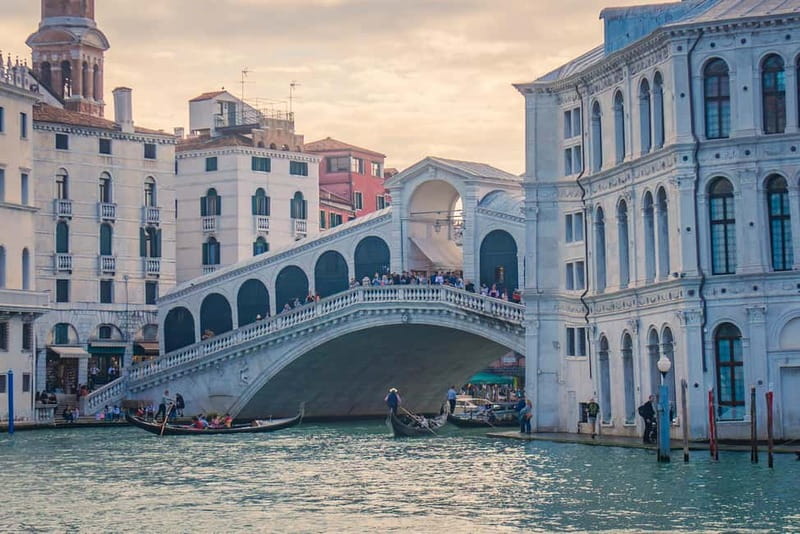
Then comes Rialto Bridge. This is the best kind of famous: it’s famous for a reason. From here you can appreciate the Grand Canal perspective, and the guide weaves in context so it feels connected to the rest of the city instead of a standalone postcard.
The tour route also points you toward stories tied to the Rialto area, including Marco Polo’s house. Even though you may not be doing an inside visit, you’ll learn how the location fits into Venice’s long-running identity—merchant wealth, civic life, and the way the city rearranged itself around shifting fortunes.
One practical note: Rialto is busy in general. The goal here is that you’re viewing it as part of a calmer walk, not fighting crowds for a three-second glimpse. Still, bring patience. Venice crowds are like weather.





Learning Venetian Dialect and the Big Reasons Venice Changed
A big part of the value here is what the guide explains between the big landmarks. You’ll learn the Venetian dialect, and it’s not taught as trivia. It’s connected to daily life and local identity, the way words and sounds reflect a city built by waterways.
You’ll also hear the broader history that explains why Venice is the way it is. The guide talks about how Venice lost out on trade routes after the New World was discovered, leaving Venice to stay more medieval in character than some places that rapidly shifted into newer economic realities.
You’ll also get practical context about the difficulties Venice faces. That might include how Venice’s geography shapes what people can do, how maintenance and infrastructure become ongoing challenges, and why the city’s beauty comes with real constraints.
This is the part of the tour that makes your later independent wandering more enjoyable. Once you understand the logic—water routes, trade history, and the city’s built response—you start seeing patterns instead of random alleys.
The Street Route: Calle Life, Hidden Corners, and Why It Feels Local
Between stops, you’ll walk the narrow Venetian streets, the calle. This matters. Venice doesn’t really let you experience itself from a single viewpoint. It’s a city you read by moving through it.
You’ll encounter quieter side lanes and small courtyards that make Venice feel less like a theme park. The tour’s point is to help you slow down long enough to notice textures: old stone, tucked openings, and the way windows and doors face the alley instead of the grand canal.
That’s where the “private guide” format pays off. You’re not stuck behind a slow-moving mass. You’re walking at the pace that fits the story you’re being told—and the places you’re being shown.
A short off-crowd walk does something simple but powerful: it reduces the sensation of rushing and makes the city feel human again.
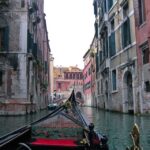
Optional Gondola Ride: 30 Minutes on the Canal, Starting at Santa Maria del Giglio
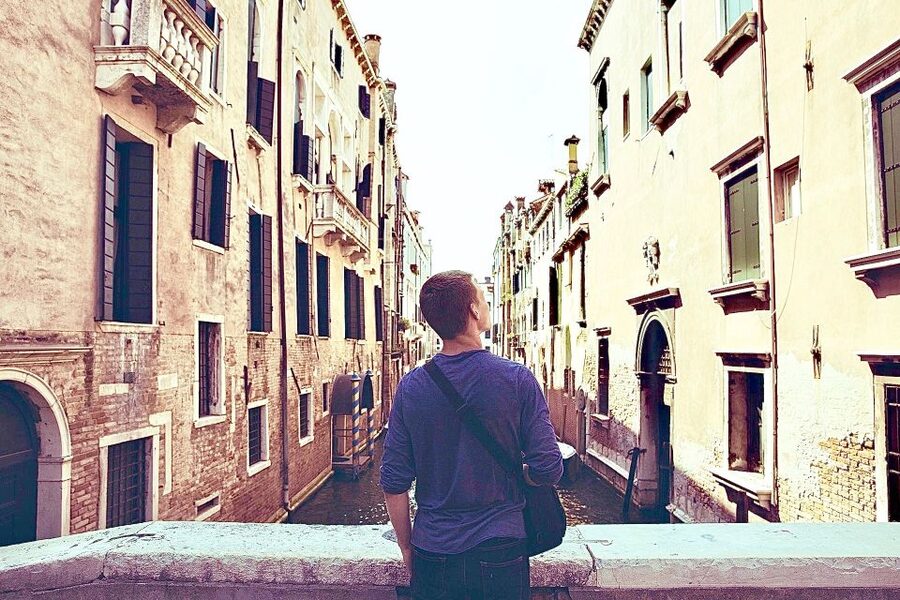
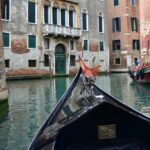
If you choose the gondola upgrade, it’s a 30-minute gondola ride. The start point is the gondola station of Santa Maria del Giglio, next to the Gritti Palace Hotel.
Plan your expectations: the gondola ride does not include a guide. So think of it as your calm time on the water, not a continuation of the commentary.
How this works best in your brain: you get the walking experience for context and direction, then you get the gondola for the sensory payoff—quiet canal movement, views of buildings that you can’t fully appreciate from the street.
If you’re doing this as a first Venice day, the gondola can be a beautiful punctuation mark. If you’re doing it late in the trip, it becomes a rewarding way to see what you just learned.
Duration and Pace: A Tour That Fits a Real Day
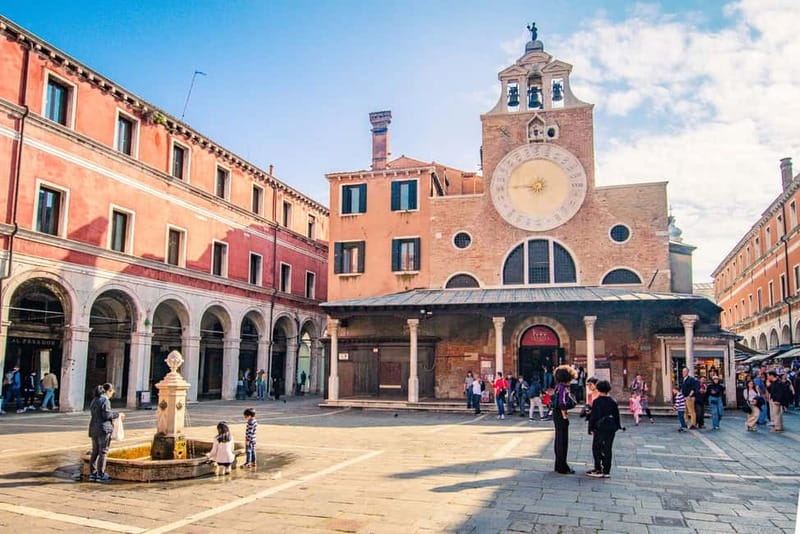
This tour runs about 2 to 2.5 hours, with starting times depending on availability. That duration is realistic for Venice. You’ll get enough distance to feel like you connected neighborhoods, but you won’t end up exhausted and cranky halfway through.
The route includes key stops and structured walking, and it’s designed so you’re not trapped in lines for ages. You also skip the ticket line, which saves time and keeps the momentum going.
One more practical point: this is not suitable for wheelchair users, so plan for your mobility needs in advance.
Price and Value: What You’re Paying For at $150.10
The price is listed at $150.10 per person, and here’s how I’d judge that value using what’s included.
You’re paying for:
- a qualified local guide for a guided walk focused on architecture and history
- exterior visits to major sights and key corners, including Fenice Theatre, the Bovolo Staircase, and Rialto Bridge
- skip-the-ticket-line support for the sights involved
- an optional add-on gondola ride of 30 minutes (booked separately in the options)
You’re not paying for:
- museum interiors or inside attraction time
So the value equation depends on your style. If you enjoy learning as you walk and you’re happy with outdoor viewing, the price makes sense because you’re buying interpretation and time-saving. If you want multiple indoor ticketed sites, you’ll likely feel limited and should add other experiences.
Private or small groups also matter here. The more personalized the route feels, the more the cost turns from a “ticket price” into a “day-shaping tool.”
Who Should Book This Private Walk (and Who Might Want Something Else)
This tour is a strong match if you:
- want quiet Venice rather than constant crowd navigation
- care about architecture and storytelling, especially how landmarks relate to the city’s history
- like having a guide teach real details such as Venetian dialect
- want a planned route that still leaves you free afterward to explore on your own
You might choose differently if:
- you specifically want inside museum visits or interior access to major attractions
- you need wheelchair accessibility, since it’s noted as not suitable
- you’re planning to bring oversize luggage, since that’s not allowed
Also, if you’re the kind of person who gets cranky when every hour feels like a photo stop, this format can help. It’s built around walking + explanations, not just standing.
Should You Book This Venice Private Walk with Optional Gondola?
If you want Venice to feel understandable instead of overwhelming, I think this is a smart booking. The best reason is the combination: a calm guided architecture-focused walk plus the option to add a relaxing 30-minute gondola later for the classic canal feeling.
Book it if you value your time and want to see the right places without losing hours to crowds or confusion. Skip it only if you need inside museum tickets or you’d rather do gondola first and build history later.
If you do book, set yourself up for success: wear comfortable shoes, come ready to walk, and treat St Mark’s Square as just the starting point—not the whole trip.
FAQ
How long is the Venice Private Walking Tour with Optional Gondola?
The walking tour is about 2 to 2.5 hours. Starting times depend on availability.
Where does the tour start?
It starts in St Mark’s Square under the arches at the Correr Museum. An assistant holding an orange umbrella will be at the entrance to the square.
Does the tour include museum or attraction entry inside?
No. The tour includes external visits only and does not include inside visits to museums or attractions.
What is included with the gondola option?
The upgrade adds a 30-minute gondola ride from the Santa Maria del Giglio gondola station next to the Gritti Palace Hotel. The gondola ride does not include a guide.
What languages are available for the live guide?
The live guide is available in Spanish, English, French, German, and Italian.
Is this tour suitable for wheelchair users?
No, it is not suitable for wheelchair users.